
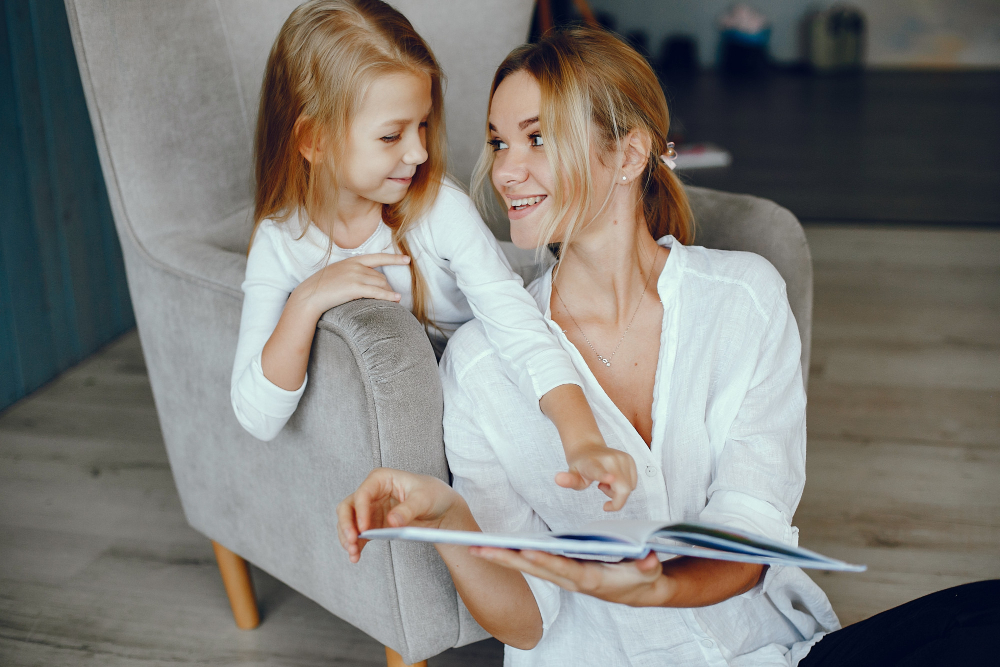
Charlotte Mason narration turns the simple act of retelling into academic rigor, helping South African homeschoolers think critically and retain what they learn.
So, What is Narration and How Does it Work?
It’s as easy as prompting a child with: “Now tell me what you remember.”
It sounds so effortless. You have just finished reading a story, maybe a picture book or a chapter from a South African story or perhaps a living book about the natural world. Instead of asking your child to answer a list of comprehension questions, you simply ask him to tell you what he remembers.
That is narration.
It really is that straightforward, although there is considerably more going on under the surface than meets the eye (or ear!)
Narration is one of the foundations of a Charlotte Mason education and it is one of the things that makes a literature-rich homeschool feel so different from school-at-home. Instead of asking a child to prove that he has been paying attention by completing a worksheet or answering a series of questions, we give him something worth knowing and then ask him to tell us what he has understood.
After years of watching our own children learn, however, we have come to understand that narration is not merely a way of checking whether a child was listening. Narration is a complex part of the learning process itself.
Narration is also an essential skill for developing writing skills when a child is old enough. Our article, Reading and Language Arts for South African Homeschoolers explains why reading aloud is the heart of homeschooling and develops vital language skills across the curriculum.
Why Narration Works: Cognitive & Academic Benefits
The simple act of narration is academically challenging. This is perhaps the most important point for the South African mother who is wondering whether a Charlotte Mason education will be academically rigorous enough.
Its casual, relaxed appearance can be misleading.
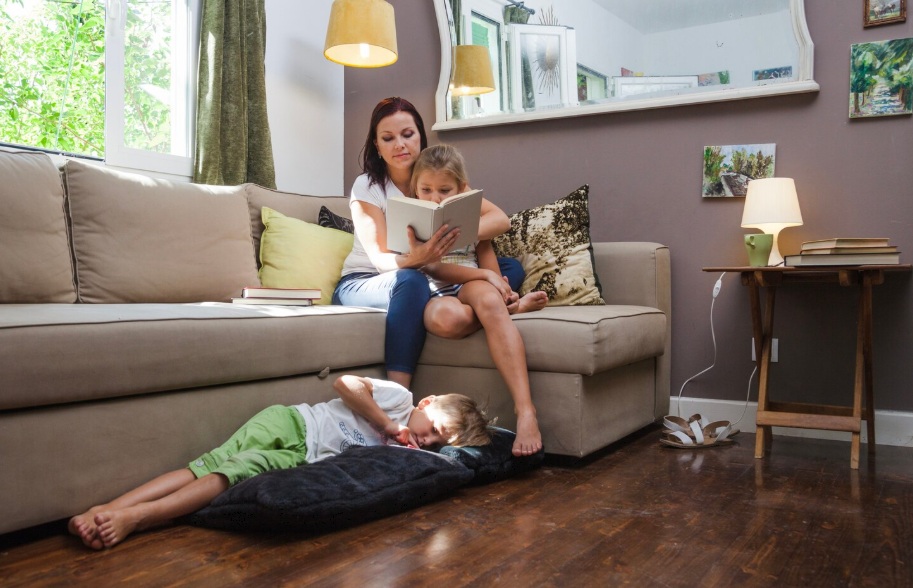
Your child may be lying on the floor or quietly engaged in another activity, while you read a story and you’ll have no worksheets and no list of completed exercises to show at the end of the morning’s lesson.
Yet underneath that apparently easy-going scene, your child is doing serious mental work:
- listening
- remembering
- selecting information
- organising ideas
- finding words
- expressing an understanding
- learning to form and communicate personal thoughts.
That is very different from memorising parrot fashion that the answer to Question 4 was “Shaka”.
A child who narrates is not simply retrieving a fact, she is processing knowledge. You don’t need to ask a series of questions to draw every detail out of her. You give her the opportunity to process what she has encountered and put it into words for herself. The goal is for her to make the knowledge her own.
This is one reason narration works so naturally alongside living books. As we said earlier, the book provides something worth thinking about and narration gives the child an opportunity to integrate that knowledge into his or her own personal understanding and build connections.
Charlotte Mason stated: “One who tries this method on himself will find that in the act of narrating every power of his mind comes into play.”
One of the remarkable things that modern brain imaging studies (using fMRI and PET scans) reveal is that stories activate far more of the brain than informational text.
Narration is a complex, multi-step process that results in a thorough and robust education.
Our article, The Researched Advantage of Charlotte Mason Homeschooling in South Africa Today shows how modern science confirms Charlotte Mason’s methods. Her approach using living books, nature study, short lessons and habit training don’t just reduce stress at home, they actually help children thrive and set them up for long-term academic success. This approach offers the kind of tailored learning historically saved for the elite,helping your children grow into thoughtful, capable people ready for whatever comes next. You are giving them a premium education!
Narration Begins with Attention
When your child narrates, he has to pay attention. He has to decide what matters. He has to organise what he has heard or read and put it into words. This process requires considerably more thinking than simply recognising the correct answer on a worksheet.
This creates a very different relationship with learning.
Your child cannot simply skim the page while waiting for you to tell him the important bits and you don’t need to read a page and then ask, “What are the three main points?”
He needs to listen because he knows that you will ask him what he remembers. A child cannot narrate something he has not attended to.
This is also why the quality of what you give your child to read matters so much.
When the material is genuinely interesting, children often want to tell you what they have discovered.
Narration Blossoms with Living Books
Narration works particularly well with living books because the child has something worth telling. A living book gives him ideas, people, stories and experiences to think about. Instead of presenting a collection of disconnected facts, it invites him into a subject.
You can read more about this in our article What is a Living Book? Why Living Books Teach More than Textbooks.
The relationship between living books and narration is an important part of the Charlotte Mason approach.
We saw this constantly in our own homes. Give a child a purely factual paragraph about some event and you might have to drag the information out of him. Give him a gripping story about someone who actually lived through that event and suddenly he has something exciting to tell you.
Narration across the Curriculum
Narration is not only for history. That is another reason it works so well in a Footprints education.
You can narrate:
History:
“Tell me what happened when the Voortrekkers reached the river.”
Geography:
“Tell me about the landscape of the Western Cape that we just read about.”
Science:
“Tell me how water moves through the cycle.”
Literature:
“Tell me what happened in the chapter.”
Biography:
“What do you think motivated this person?”
Nature study:
“What did you notice when we were on the mountaintop?”
Art:
“Tell me what you liked about this painting.”
A documentary or film:
“What stood out to you?”
The point is not to create a narration exercise for every single thing your child does.
The point is to develop a habit of paying attention, thinking and communicating.
We often ask a child to narrate by recapping what we read previously, before we read the next chapter. It’s a natural purpose for narration and an opportunity for a quick daily assessment.
Our article, Language Arts and Reading for South African Homeschoolers explains why reading aloud is at the heart of homeschooling and developing the full range of language skills naturally and easily.
Narration is not Memorisation
This is one of the biggest misconceptions about narration. You are not asking your child to memorise a passage word for word, instead you are asking him to understand it well enough to tell you about it.
Imagine that you have just read a story about a young boy living in the Karoo during the nineteenth century. You close the book and ask your child to narrate.
She might tell you about the drought, the animals, the family, the journey or the particular incident that caught her attention.
Another child might focus on something completely different.
In fact, the differences can be fascinating and give you a glimpse into what your children noticed and what made an impression on them. Over time, you begin to see how their understanding is developing, which ideas they remember and where they need a little more help.
Narration makes Learning Personal
This is particularly important when we are teaching South African history.
There is a temptation to think of history as a collection of facts that children need to know:
- dates
- names
- battles
- places
- treaties
- political events
- important people
Yet South African history is much more complicated and much more interesting than that bullet list.
There are multiple perspectives, different communities, conflicting interests, family stories and ordinary people whose lives were affected by events they did not control.
When your child narrates a story about South Africa’s past, you hear which part of that story has connected with him or her.
“She actually made a comment to me about the San and how she wishes she could live back then.
It brought me such great joy because I know it means she is enjoying the lessons.”
~ Julie Estey
Perhaps your son remembers the journey of a family moving across the interior. Maybe your daughter is fascinated by what life was like for children on an 1820 Settler farm. Perhaps he wants to know why people made a particular decision. Perhaps she notices something about the experience of another cultural group that you had not expected her to notice.
“My son was imagining something today about the Khoi-Khoi people and shared it with me in his playtime.
What I like too is that they identify with Ghamka and his people and feel sad for them when bad things happen –
what a good way for them to learn to see things from a totally different point of view.”
~ Tina Prokopis
Those conversations are valuable.
We want South African children to know about their own country, not simply as a sequence of events that happened before they were born but as part of the story of the land beneath their feet, its people, the geography, the flora and fauna, everything that makes South Africa unique.
The world is their classroom, but South Africa is their home.
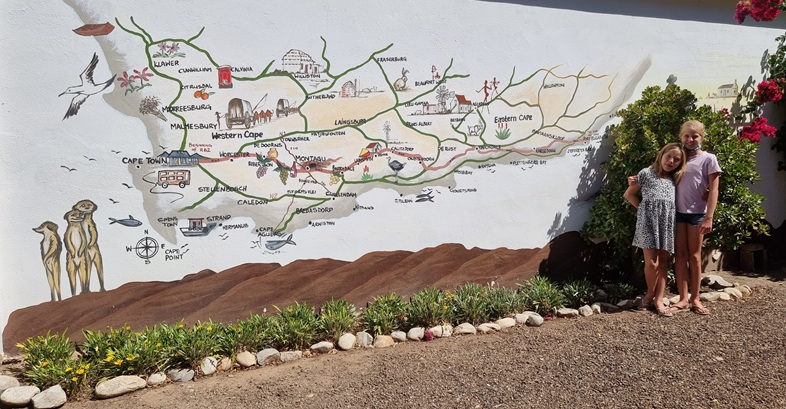
That is one reason narration fits so naturally into Footprints. Our curriculum uses stories to bring South African history, geography, people and places to life, then gives children space to think about what they have encountered.
Narration as Ongoing Assessment
“But how do I know if my child is learning?”
This is probably one of the first questions a new homeschool mother asks.
If there is no worksheet with ten questions and a mark out of ten, how do I know whether my child actually learned anything?
The answer is wonderfully simple.
Listen.
When your child narrates, you are listening to his understanding.
You will quickly notice the difference between “I don’t know” and “Actually, I think the reason they moved was because there wasn’t enough water, but then they discovered…”
The second child is thinking…He may not have remembered every detail. He may even have misunderstood something but that gives you something useful to work with.
Then you can either ask another question, reread a section or perhaps discuss an alternative perspective. You might even need to look something up together to get clarity.
Narration therefore becomes part of your ongoing assessment rather than an event that happens at the end of a unit.
This is one of the significant differences we explore in Charlotte Mason Homeschooling vs Traditional Schooling and CAPS.
In a conventional classroom, written work and formal assessment are practical ways for one teacher to monitor many children. At home, you have something a classroom teacher can only dream of: the opportunity to listen carefully to your individual child every day, one-to-one.
To implement this daily assessment smoothly, start where your child is development-wise. For younger children, this always means starting with oral narration.
Oral Narration Comes First
For young children, narration is usually oral. You read a passage aloud or your child reads it independently and then she tells you what she remembers.
Don’t be tempted to turn narration into a formal presentation. Keep it casual and relaxed.
Your child doesn’t need to stand at the front of the room. He can narrate to you while lying on the couch, walking to the kitchen or having a snack.
In fact, some of our best homeschooling conversations happened nowhere near a desk.
At the dinner table or in the car, you might say: “Tell Dad what you learned about San rock art today.”
…and suddenly your child is explaining something he remembers from the morning’s reading.
That is narration. There is no need to make a young child write a paragraph after every reading. In fact, requiring too much written work too early can get in the way of the very thing narration is meant to develop.
Elsewhere, you might read about Charlotte Mason purists who scribe every oral narration. In our busy homes, we were just glad to hear our children were learning. We wrote some of their narrations down for our young children and then let them draw a picture alongside it, but we certainly didn’t capture every narration for posterity!
Written Narration Develops Naturally
As children grow older, narration gradually becomes written as well as oral. This is where many parents have an “aha!” moment.
We often expect children to learn to write by giving them writing assignments. Yet a child who has spent years listening to good writing and expressing ideas in his own words already has something important to say.
Narration helps build the bridge between knowing something and communicating it.
A young child might draw a picture and tell you about it. An older child might dictate his narration to you. Later he may write a paragraph himself and eventually, he may be able to write several paragraphs or even pages expressing a thoughtful response to something he has read.
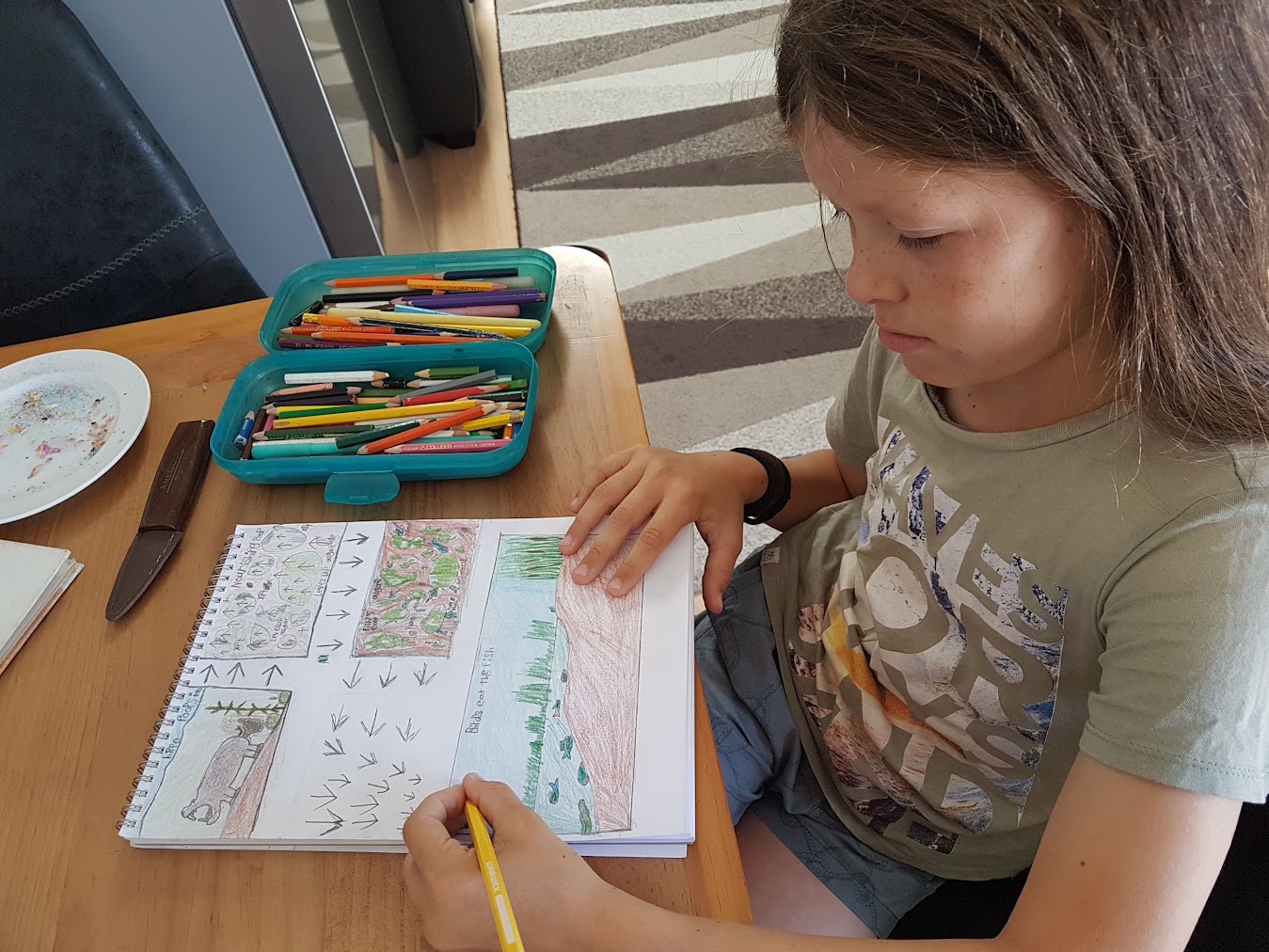
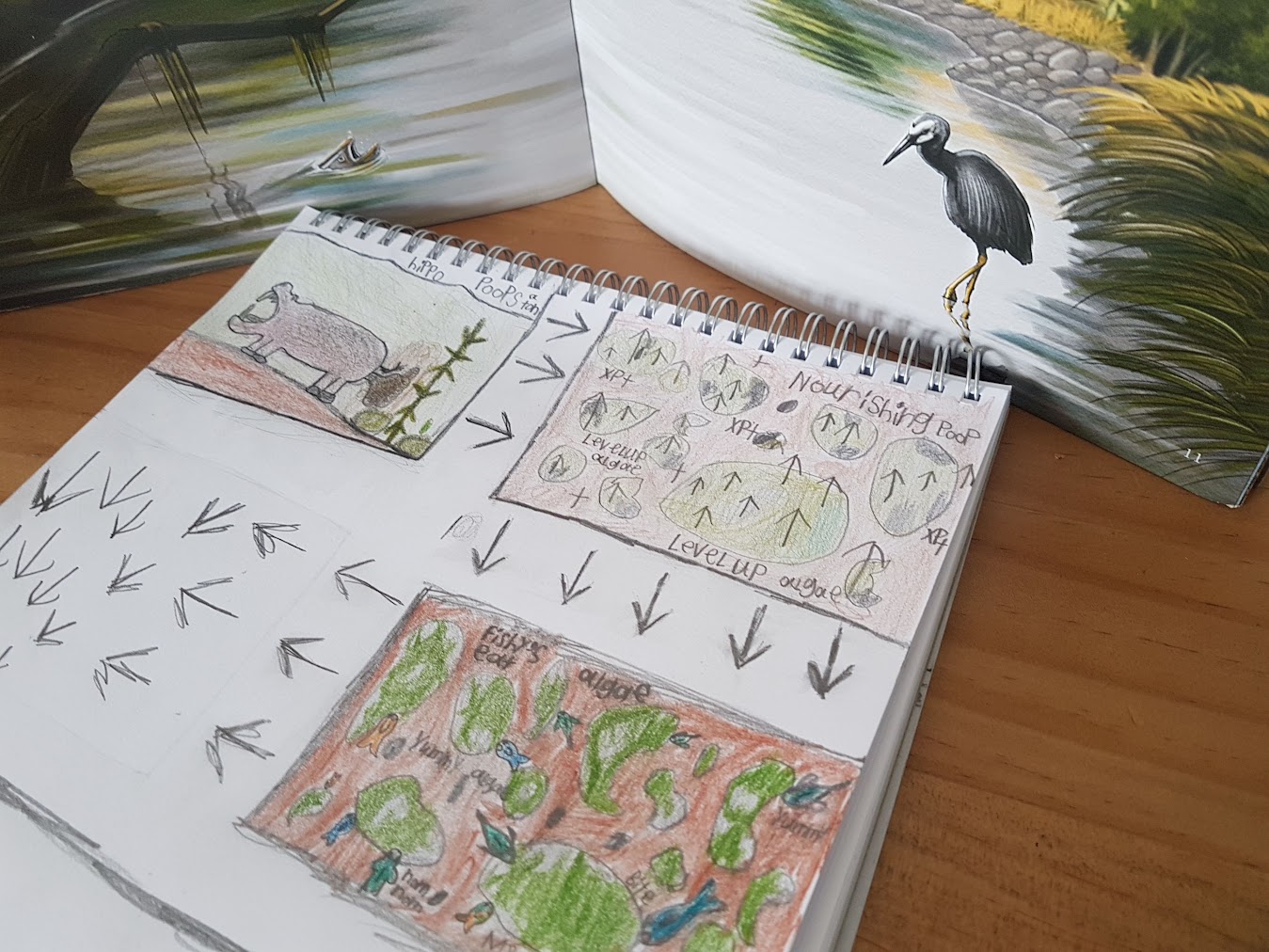
This is one reason we use Homeschool Notebooking alongside narration and also have a place for writing in the students’ timeline books included in Footprints and Voetspore. Notebooking gives children somewhere to preserve the things they have learned, while narration provides the thinking and language that makes those records meaningful.
A notebook does not have to become another workbook. It can contain a child’s written narration, a drawing, a map, a poem, a nature observation, a timeline entry or something he has created himself. In programs like Footprints Nature Quest, for example, science notebooking becomes a hands-on way for children to document food chains, bird tracks and everyday nature observations.
Narration and Multiple Ages
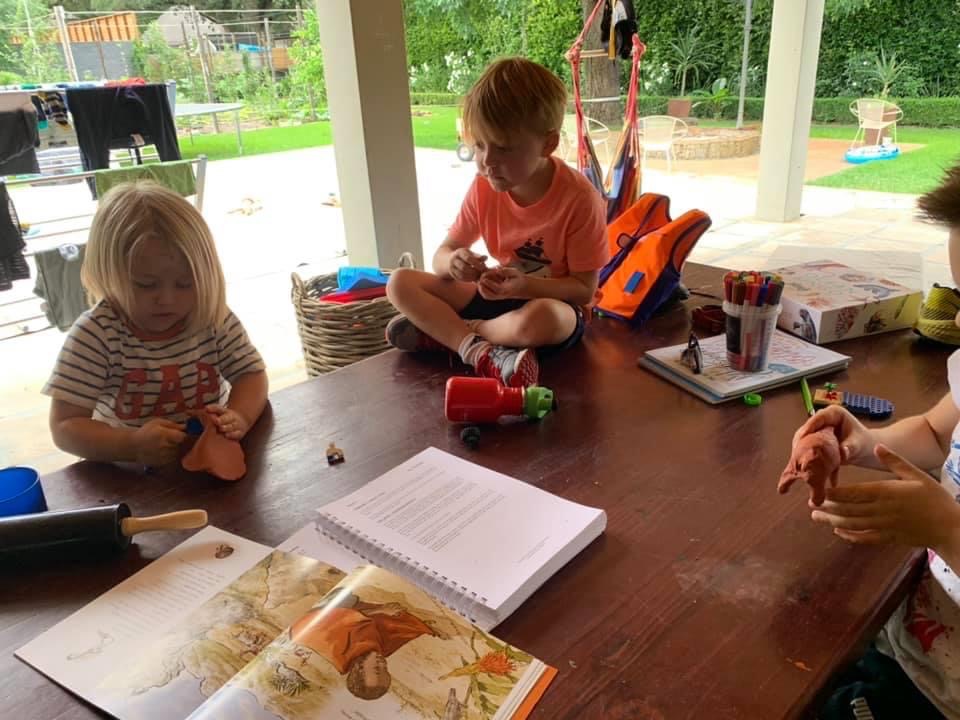
Narration is also one of the reasons literature-rich homeschooling works so well when you have several children. You don’t need a completely separate lesson for every child.
Read a story aloud to the family and ask each child to narrate at an appropriate level.
Years ago, in our home, one young child dictated her narration and it filled a full page with a detailed retelling from start to finish. Her younger brother’s version was only one paragraph that focused on the climax and resolution of the story.
A teen might offer a deeper perspective, like a discussion of the historical context or offer an opinion about the choices made by the characters.
Children of different ages may have all encountered the same story but their narrations will reveal their different stages of development.
Sometimes the older child will even teach the younger child something simply by explaining it.
That is one of the joys of Homeschooling Multiple Ages Together.
Troubleshooting
What if my child says, “I don’t know”?
Don’t panic. It happens. Sometimes a child genuinely wasn’t paying attention. Sometimes the passage was too difficult. Sometimes he was tired or maybe he simply doesn’t know how to begin.
You don’t need to turn narration into a battle. You could try a different prompt or question to help the child remember:
- “What happened first?”
- “What did the boy find?”
- “Where were they?”
- “What surprised you?”
- “What was your favourite part?”
You can also allow a child to draw first and then tell you about the picture.
The goal is not to produce a polished performance.
The goal is to develop the habit of paying attention and communicating what has been learned.
Over time, children improve at narration and that habit becomes remarkably powerful.
Do’s and Don’ts of a Simple Narration Exercise
If you are trying narration for the first time, don’t overcomplicate it and don’t make it feel like a test.
- Choose a good book.
- Read a short section.
- Put the book down.
- Then say: “Tell me about what we have just read.”
- Then listen.
- Don’t interrupt and correct every detail.
- Resist the temptation to ask ten comprehension questions.
- Don’t try to explain everything yourself.
- Give your child time to think.
You may be surprised by what comes back.
Sometimes it will be a beautifully detailed account or it might be just one tiny moment that fascinated a child. Sometimes it will be a question you hadn’t considered. Sometimes it will be an unexpected connection to something you read three weeks ago.
That is the power of narration: your child is showing you what is happening inside his mind.
“Our boys have a natural love for history and this curriculum absolutely speaks to them. Long after we have finished a story a conversation often spontaneously starts going back to something in one of the stories, I can see that the cogs are turning and they’re thinking!”
~ Wendy Botha
From Narration to Critical Thinking
Narration makes much more sense once you see it as part of the bigger Charlotte Mason picture. It is not a replacement for good books, thoughtful teaching or meaningful experiences. It is the thread that helps your child turn those experiences into knowledge that he can remember, understand and express.
Narration is a vital part of the Footprints approach because we don’t want to teach our children what to think, we want to teach them how to think.
We don’t want our children merely to accumulate information. We want them to know things, to remember and we want them to be able to explain what they know.
We want them to ask good questions, recognise different perspectives, make connections and eventually develop ideas of their own.
Narration is one of the simplest yet profoundly effective tools we have found for helping that happen.
- A good story gives the child something worth knowing.
- Narration gives him the opportunity to make sense of it.
- Notebooking gives him a place to preserve it.
- Discussion takes the thinking further.
And over time, all those little acts of telling, thinking, writing, observing and connecting begin to weave together into something much bigger than a collection of school subjects.
As Charlotte Mason proclaimed: “Education is the science of relations.” She believed the true goal of education isn’t just acquiring facts, but building lasting connections with ideas, people and the world and empowering children to remain curious, engaged lifelong learners.
That is the kind of education we wanted for our own children and it is still the kind of education we want to help South African families create today.
More about Charlotte Mason Homeschooling in South Africa
- Charlotte Mason Homeschooling in South Africa
- What is a Living Book? Why Living Books Teach More than Textbooks
- Narration in a Charlotte Mason Homeschool
- Homeschool Notebooking: An Alternative to Workbooks
- Mapwork in a Charlotte Mason Homeschool
- The Researched Advantage of Charlotte Mason Homeschooling in South Africa Today
- Charlotte Mason Timelines: Make History Come Alive
- The Benefits of Literature-based Learning
- Gentle yet Academically Rigorous: A Return to High-Quality, Personalised Education
- Why Do Nature Study?
- 6 Reasons Stories are Better than Textbooks
- Homeschooling Multiple Ages: How to Make Multilevel Homeschooling Work
We know that no one chooses home education because it’s easy, but rather because we believe that it’s worth the investment of time and energy into shaping our children’s lives.
If you could use a little reassurance, perspective, and peace in your inbox, sign up today, because sometimes, the smallest words of encouragement are exactly what keep us going.
Join the Footprints community and get your Nurture Nuggets today, packed with tips and advice from moms with over 25 years of home education experience.
Sign up today, so you don’t miss the next issue.