
Story-rich. Literature-based. Multi-age. Connected to the real world. Discover the philosophy and ethos of a Charlotte Mason homeschool and discover an alternative way to educate your children than school-at-home.
If you have ever opened a homeschool curriculum and thought, “Surely there must be more to education than working through textbooks and worksheets,” you are not alone.
That is one of the reasons Footprints exists.
In this short video, Shirley and Wendy discuss Charlotte Mason and her influence on homeschooling.
Our South African homeschool curricula are strongly influenced by the educational philosophy of Charlotte Mason, a British educator who lived from 1842 to 1923. However, Footprints is not simply a generic Charlotte Mason curriculum with South African content added to it.
We have taken the principles that we believe make Charlotte Mason’s approach so rich and combined them with something we felt was missing from many available homeschool resources: our own South African story.
Our children should know the landscapes around them, the people who shaped our country, the stories of previous generations and the richness of the natural world on their own doorstep.
They should not have to choose between a rigorous education and an education that is enjoyable, meaningful and connected to real life.
That is why Footprints uses living books, narration, short lessons, nature study, hands-on learning, habit formation and rich stories as the threads that hold learning together.
Reading and Language Arts for the South African Homeschoolers explains why reading aloud together is essential for developing language skills across the curriculum. It’s also an academically effective, yet relaxing way to join the “rebellion” against boring textbooks and deskwork!
What is the Charlotte Mason homeschool approach?
Charlotte Mason believed that children are not empty vessels waiting for adults to fill them with facts but that they are people with minds of their own.
Her famous statement was: “Children are born persons.”
That simple idea has profound implications for homeschooling. If your child is a person, then education is not simply about getting information into his head. It is about introducing him to ideas, people, places, stories and experiences and giving him the opportunity to think about what he encounters.
Charlotte Mason described education as “a science of relations.”
In other words, children learn best when they begin to connect ideas together.
For example, a child who learns about the Frontier Wars as a collection of dates and battles has learned some historical information.
In contrast, a child who reads the story of a family living in the historical Eastern Cape, looks at the landscape of the Fish River area on a map, reads about the people they encountered, ponders why they made the choices they did, considers how the conflict affected both sides, studies an artwork from the period and then tells you what happened is beginning to build relationships with history.
That is the kind of learning we want to encourage at Footprints.
What is Charlotte Mason’s approach?
You may have heard that Charlotte Mason homeschooling means using “living books” and letting children spend lots of time outdoors. Those things are important, but they are only part of the picture.
A Charlotte Mason-style education also includes:
- “living books” rather than impersonal textbooks wherever appropriate
- narration rather than constant worksheets and tests
- short, focused lessons
- careful attention to habits
- character formation
- nature study and time outdoors
- art, music and poetry
- first-hand experiences
- meaningful conversations
- copywork and dictation
- practical and hands-on activities
- a broad and generous education
- plenty of time for play, exploration and independent interests
- learning together as a family where possible
You don’t have to implement every Charlotte Mason method perfectly to benefit from her philosophy. We are not Charlotte Mason purists at all!
In fact, one of the things we love about the approach is that it can be adapted to real family life.
Why Footprints uses the Charlotte Mason Approach
When we began developing Footprints in 2002, we were not looking for a fashionable educational method, but our motive was that we needed a solution for our own families!
We were homeschooling our own children. We had looked at different educational philosophies and tried different approaches. We had seen what happened when children were interested in what they were learning and what happened when learning became little more than completing the next page in a schoolish workbook.
The more we read Charlotte Mason’s original writings and implemented her methods, the more we saw the difference.
As Wendy wrote in the about 2003: “Each time I have sat down to work on one of these Footprints programmes I have been mindful of one question: ‘Would this make Charlotte Mason smile?'”
That question still captures something important about Footprints:
We don’t claim to reproduce a nineteenth-century British education exactly as Charlotte Mason designed it. We live in South Africa in the twenty-first century.
Our children and yours need to understand our own history, our diverse cultures, our environment, our economy and the world they are growing up in but the underlying principles remain remarkably relevant.
Give children something worth knowing.
Give them good books.
Give them time to think.
Let them tell you what they know.
Take them outdoors.
Build good habits.
Give them a broad education.
And don’t allow education to squeeze the joy out of childhood.
That is the Charlotte Mason influence you will find woven throughout Footprints.
We also encourage families to enjoy Charlotte Mason Timeline activities and Mapwork to make learning more visual.
1. Living Books: Why Footprints Teaches through Stories
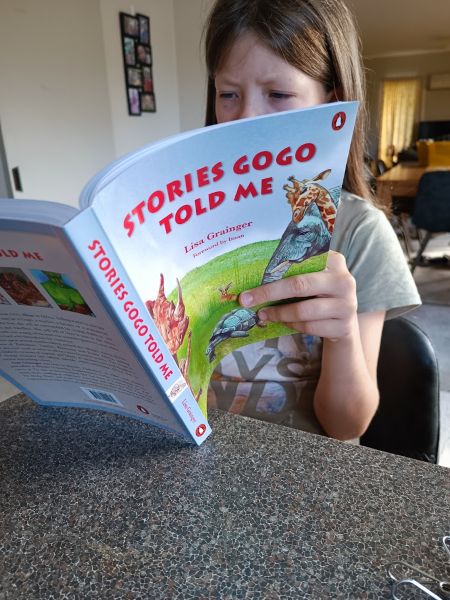
Perhaps the most recognisable feature of a Charlotte Mason education is the use of living books.
What exactly is a living book?
A living book is not simply an old book, a long book or a book with beautiful pictures, although it might well be all of the above!
It is a book that communicates ideas through engaging, living language rather than presenting a collection of disconnected facts.
A living book introduces you to a subject through the voice, experience and enthusiasm of an author who knows and cares about the subject.
Think about the difference between these two approaches.
A textbook might say: The Anglo-Boer War began in 1899 and ended in 1902.
That is a fact, but a well-written historical account might introduce your child to a family living through those years. Suddenly there are people, decisions, uncertainty, fear, courage and consequences.
Your child begins asking questions.
- Why did they live?
- What would I have done?
- Why did the two sides disagree?
- What happened to our family at that time?
- What was happening in the rest of South Africa during the war?
That is the beginning of a relationship with history.
Shirley and her son recently read a story of a shipwrecked man who drifted on a life-raft on the Atlantic Ocean for 76 days in 1982. Through that story, they learned about trade winds, ocean currents, shipping lanes, human nutrition, marine ecology, celestial navigation, mapwork, salt water distillation and much more. In the context of the story, scientific topics that might never have had much appeal on their own, became a fascinating and crucial part of a gripping survival story. That’s what a living book does and our Footprints stories are just as captivating and packed with similar topics interwoven with historical facts!
Our article: What is a Living Book? Why Living Books Teach More than Textbooks explains more about living books versus twaddle and their value to South African homeschoolers.
Stories make learning memorable
At Footprints, story is not an entertaining extra added after the “real” learning.
Story is one of the primary ways the learning happens.
This is why our South African history programmes use historical fiction alongside carefully researched background information that it told in the casual and personal narrative style of a grandmother chatting with her grandchildren about times past over tea. Granny Stella (or ouma Stella) uses trinkets and keepsakes to spark conversations about South African history.
Children then encounter South African history further through stories, literature, maps, art, discussion, activities and investigation rather than simply working through a chronological list of dates.
Our aim is for your child eventually to say:
“I remember that story,” and then: “Oh! That happened at the same time as…”
That is a connection…and connections are at the heart of a Charlotte Mason education.
2. Narration: Learning by Telling What You Know
Narration is one of the most powerful and, at first, one of the strangest Charlotte Mason methods for families who are used to traditional schooling. Instead of immediately asking your child to complete a worksheet about what they have read, you ask them to tell you about it. That’s it.
You read a section of a living book then you close the book and you say: “Tell me what you remember from the story so far.”
Your child has to listen carefully, process the information, decide what is important and organise her thoughts sufficiently to communicate them. That is a lot more than simple recall.
Narration develops:
- listening skills
- comprehension
- memory
- vocabulary
- sequencing
- communication
- critical thinking
- confidence
- the ability to identify important ideas
- the ability to express those ideas in your child’s own words
All this can begin long before a child is able to write.
A young child can tell you what happened in a story. An older child can narrate a history reading and a teenager can explain an argument presented by an author and tell you whether he agrees with it or not.
Narration isn’t just an oral assignment
One of the mistakes parents sometimes make is turning narration into another formal assignment or testing.
It doesn’t need to be.
You might be washing dishes while your child tells you about what she has just read or you might discuss a chapter around the lunch table.
You might ask your child to tell a younger sibling what happened.
You might ask:
- “What surprised you?”
- “What do you think the author was trying to tell us?”
- “What would you have done?”
- “What do you remember most?”
This is learning happening through conversation.
Footprints uses narration throughout our programmes because we want children to think about what they have encountered rather than simply prove that they have completed it.
Read more about the simple yet academically complex process of Narration in a Charlotte Mason Homeschool and the Do’s and Don’ts for implementing this activity effectively.
Narration and discussion are also useful ways for you, as the parent, to assess whether your child is actually understanding what he is learning. As children mature, they can record their narrations in written form. Homeschool notebooking is a popular and effective way to do this and we offer printable notebooking pages for many of our Footprints homeschool programmes.
Read more about Homeschool Assessment and how you can use narration and notebooking to assess your children’s learning.
3. Short Lessons: Focused Learning without Dawdling
One of the things that surprises parents when they first discover Charlotte Mason is how little formal lesson time young children actually need. That does not mean children are learning less than their peers who are captive in classrooms for hours. It means that Charlotte Mason understood something many homeschool parents discover for themselves:
A child can only concentrate for so long before his mind wanders.
Charlotte Mason’s schools used relatively short lessons, especially with younger children, and expected children to give their full attention during that time. This is very different from the idea that children must sit at a desk for hours before they have had a “proper” school day.
A short lesson might be:
- a focused reading
- a narration
- a spelling activity
- a maths lesson
- copywork
- a picture study
- a geography activity
- a nature observation
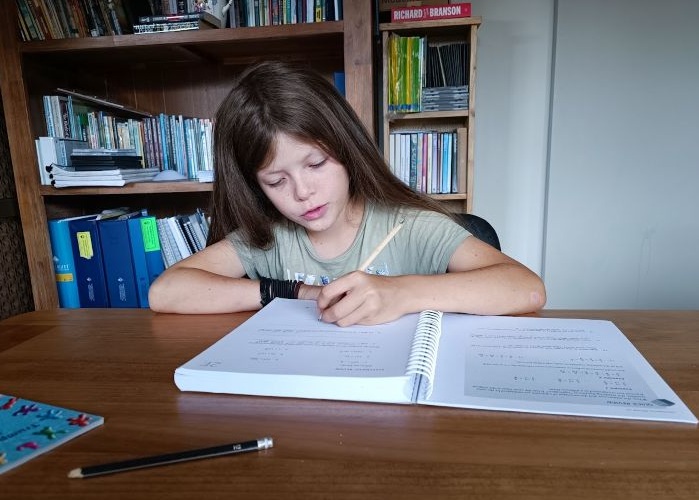
Then you move on. The objective is not to fill every available hour but to make the hours you do spend learning worthwhile.
Why short lessons matter for homeschool families
Short lessons can make an enormous difference to the atmosphere in your home.
Instead of:
“Hurry up. We still have three pages to finish,” you could say:
“Let’s concentrate on this for the next fifteen minutes and then we’ll move on.”
That changes the experience for both you and your child.
It also makes multi-age homeschooling much more manageable.
Wendy homeschooled four children and Shirley has six. At Footprints, we deliberately create programmes that allow the family to learn together as much as possible, rather than requiring you to teach six completely separate grade-level programmes. Our programmes are designed around multi-age, literature-rich learning.
4. Nature Study: South Africa is Your Classroom
If there is one part of Charlotte Mason’s philosophy that we believe South African families have an extraordinary opportunity to embrace, it is nature study.
Look outside.
You don’t need a science laboratory. You have an enormous one right outside your door.
Whether you live in Boksburg, Bergvliet, Gqeberha or Bloemfontein, a small town like Stutterheim, Pofadder, Eshowe or Whittlesea or somewhere in the countryside in the middle-of-nowhere, your children live in a particular environment with its own plants, animals, weather patterns, landscapes and seasons.
Go and look at it.
Charlotte Mason encouraged children to spend substantial time outdoors and to develop a relationship with the natural world through observation.
This is more than simply allowing your children to play outside.
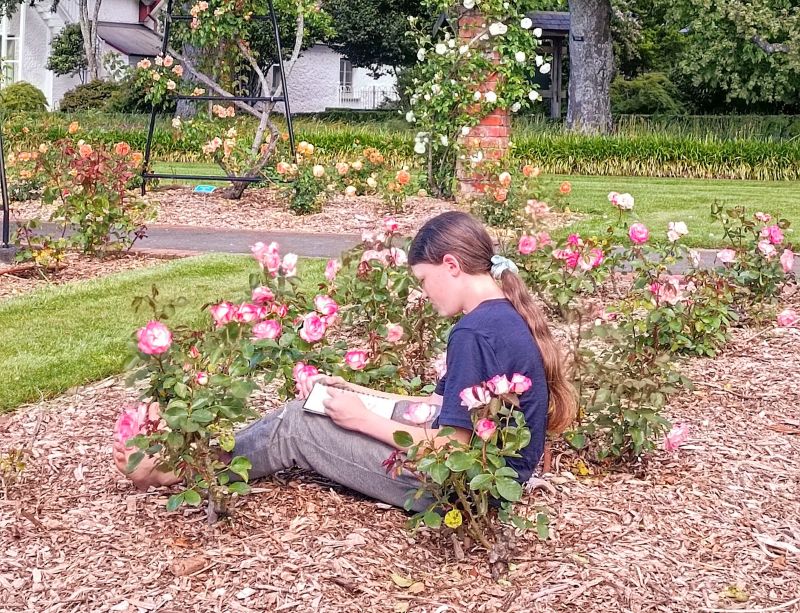
Nature study is learning to notice.
- What bird is that?
- Why does that plant grow here?
- What has changed since last week?
- Where did that spider build its web?
- Which trees are flowering?
- What insects are visiting the flowers?
- What happens to the soil after rain?
- Why does one part of the garden dry out faster than another?
Those questions lead naturally into science, geography, art, writing and environmental awareness.
Nature study doesn’t have to be complicated
If you have never done nature study before, don’t buy a complicated collection of equipment and create another item on your homeschool checklist.
Start with a walk.
Take a notebook.
Look.
Listen.
Draw something.
Come home and find out more.
Footprints Nature Quest and Natuurskattejag applies this philosophy specifically to the extraordinary variety of South Africa’s natural environments. It combines stories and information with observation, nature journalling, mapwork and practical activities. Here’s a sample Nature Quest Sample Lesson
Your child doesn’t need to know the Latin name of every plant. The first step is simply to notice what is there. Learn more by signing up for our free series “Nature Study Made Easy” at Why Do Nature Study?
5. Habit Training
Charlotte Mason understood that education isn’t just about academic knowledge. Your child is also forming habits and building character traits.
Those habits matter.
- How does your child approach difficult work?
- Do she finish what she starts?
- Can he pay attention?
- Does she tell the truth?
- Can he listen to another person’s point of view?
- Does she take responsibility for her belongings?
- Does he notice when somebody needs help?
- Can she work without being constantly reminded?
These things don’t suddenly appear when a child turns eighteen. They are formed through thousands of small choices made during childhood. Charlotte Mason placed considerable emphasis on the formation of good habits because she understood that habits can make the right behaviour easier and more automatic.
This is particularly relevant to homeschooling. You have the opportunity to work on habits within everyday family life, rather than trying to squeeze character education into a weekly lesson called “Life Skills”.
If your children are learning to complete a short lesson attentively, put their books away, care for their nature journals, listen when someone else is speaking or finish a task before moving on to something more enjoyable, you are doing more than managing your homeschool.
You are helping your children develop habits that will serve them for life.
6. Character Matters
We don’t homeschool simply to produce children who can pass examinations. Academic achievement matters for sure, but we want our children to develop knowledge and skills that will open doors for them.
What will happen when those doors open?
- Who will they be?
- Will they be responsible?
- Will they have integrity?
- Will they persevere when something is difficult?
- Will they be able to think for themselves?
- Will they care about other people?
- Will they recognise truth?
- Will they have the courage to make good decisions even when the crowd is going in another direction?
These are educational questions too. Charlotte Mason’s approach leaves room for children to encounter ideas and people worth knowing.
They meet courageous people, foolish people, generous people, selfish people, explorers, scientists, artists, leaders, entrepreneurs, ordinary families and people facing extraordinary circumstances.
Through stories, children encounter consequences. They see choices being made and they begin to wrestle with questions of right and wrong. They develop sympathy and judgement.
At Footprints, we want these encounters to contribute to the formation of the whole person. We often say, “We are not raising children, we are raising adults!”
7. A Broad, Generous Education
One of Charlotte Mason’s great strengths was her belief in a generous education. Education was not supposed to be reduced to the subjects that could be measured most easily instead a wide variety of topics and subjects were to be presented to children, like a buffet table, laden with a spread of rich foods.
Children should encounter literature, history, geography, science, art, music, poetry, nature and ideas.
This matters because you never know in advance which idea will ignite your child’s imagination. The child who seems uninterested in “science” may become fascinated by a story about an African animal. The child who dislikes “history” may become absorbed in the story of a particular person. The child who doesn’t enjoy writing may happily narrate a story about something they care about.
One young boy using Footprints – The Early Years was so captivated by learning about sailor’s knots used by the early navigators that for weeks, he carried a rope in his pocket everywhere he went. He learned to tie bowlines and reef knots and all sorts of others. He took up dinghy sailing and when he finished high school homeschooling, he did his yachting skipper’s ticket and sailed professionally as crew on an ocean-going yacht. A story sparked a lifelong love of sailing.
Another child read a picture book story about an eagle chick in Little Footprints and took up an interest in birds, birdwatching and ornithology that lasted for many years.
You just never know which topics may spark something more lasting!

Footprints draws from many different kinds of resources.
A typical Footprints lesson may connect:
a story → a historical event → a map → a conversation → a piece of art → a writing activity → a practical experience.
We also offer video and audio material on a dedicated course website for each curriculum. In this way, the subjects stop feeling like isolated topics. They begin to connect.
That is the “science of relations” in action.
8. South African Stories Matter
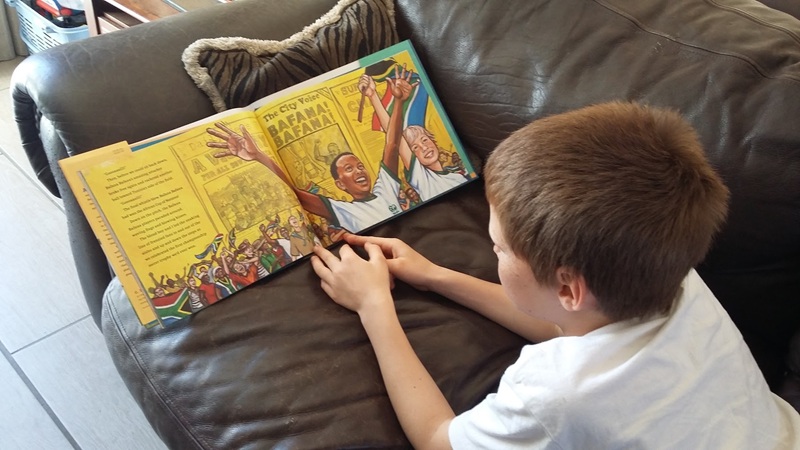
This is perhaps where Footprints differs most noticeably from simply downloading an overseas Charlotte Mason curriculum.
Your children live here, not in the English countryside or the great plains of America. They need to know South Africa.
They should have opportunities to learn about the people, places, landscapes and events that have shaped the country they call home.
That means reading about South African history.
It means looking at South African art and listening to South African music.
It means exploring our geography.
It means discovering our extraordinary natural heritage.
It means asking difficult questions about our past rather than pretending that history is simple.
It means recognising that history can be told from different perspectives and it means allowing children to discover where their own family story intersects with the larger story of South Africa.
This is why our social studies programmes don’t simply present a list of dates and facts. They use historical stories and literature alongside factual background, maps, art, poetry, family history and investigation. Children are encouraged to explore not only what happened but how larger events affected ordinary people and their own communities.
One homeschool mother’s emotional reaction to Footprints led to our article, From “Invisible” to a Validated Cultural Heritage. She finally saw her place and significance in South Africa’s story.
We want your children to be able to look at the landscape around them and think: “I know something about this place.”
A literature-rich education can open up the whole world to your children. That is one of its greatest strengths but there is something else we believe is equally important:
Your child needs to know their own place in that world.
It is wonderful to read stories from other countries, discover different cultures and learn about people and places far beyond South Africa. Our children should have a broad view of the world but alongside that, they need the opportunity to know their own country deeply.
The world may be their classroom, but South Africa is their home.
That is why Footprints deliberately weaves South African history, geography, nature, literature, heritage and contemporary life into a broader, world-encompassing education.
We believe children need both perspectives: a window to the wider world and a deep sense of where they stand within it.
9. What Does a Charlotte Mason Homeschool Day Look Like?
Perhaps you are reading all this and wondering: “This sounds wonderful, but what would we actually do on a Monday morning?”
Our article Charlotte Mason Homeschooling vs Traditional Schooling and CAPS addresses the differences between these approaches to learning and how the starting point and goals are fundamentally different from CAPS (the national curriculum assessment policy statements), and therefore, how this child-focused approach easily meets and exceeds them.
Your typical homeschool day might look something like this:
- After breakfast, you gather your children together.
- You read aloud from a living book.
- Your younger child listens while drawing.
- Your older child listens while making notes or simply paying attention.
- You close the book.
- “Tell me what happened.”
- Your children narrate.
- You discuss something that caught their attention.
- Then you move on to maths.
- Later, your children might do copywork or dictation.
- You read another story.
- Perhaps today it is history. Perhaps geography.
- After lunch, you go outside.
- You walk around the garden or local area.
- You stop to examine a plant.
- Someone notices an insect.
- Someone else wants to draw a bird.
- Later in the afternoon, there may be time for reading, art, music, crafts, a practical project or simply play.
It doesn’t have to look exactly like this. Your family is not our family or like the homeschooling family down the road.
You have babies, toddlers, teenagers, appointments, sport, church, work, animals, gardens, grandparents and all the other things that make up the sometimes messy reality of family life.
Charlotte Mason gives you principles. It doesn’t require you to recreate a museum-style replica of a nineteenth-century schoolroom in your home.
Is Footprints a Charlotte Mason Homeschool Curriculum?
Yes, but with an important qualification.
Footprints is Charlotte Mason-inspired rather than a rigid reproduction of Charlotte Mason’s original ideas.
We have taken the principles that we believe are most valuable and woven them into our curriculum that is relevant to South African families today.
You will find:
- living books
- story-driven learning
- narration
- copywork
- dictation
- nature study
- art appreciation
- poetry
- music appreciation
- mapwork
- timeline activities
- hands-on activities
- discussion
- creative writing
- research
- practical projects
- multi-age learning
- opportunities for first-hand experience
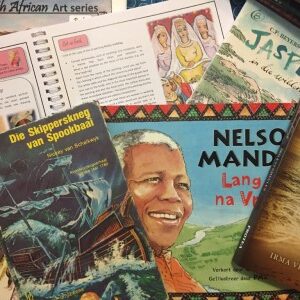
These aren’t random activities added to make the curriculum more interesting. They are part of the educational philosophy behind Footprints.
As we said, we offer multi-subject South African unit studies deliberately combining living books with narration, dictation, copywork, nature study and hands-on activities.
You Don’t Have to be a “Charlotte Mason Homeschooler”
There is another important point. You don’t have to label yourself a Charlotte Mason homeschooler to use Footprints.
Perhaps you use some Charlotte Mason ideas and some other approaches in a eclectic mix. Perhaps you have never read a single book by Charlotte Mason. Perhaps you simply know that you want something more interesting than textbooks.
That’s fine.
You don’t need to understand all the educational terminology before you begin.
You can start with a story.
- Read it.
- Talk about it.
- Ask your child to tell you what they remember.
- Go outside.
- Look at something together.
- Ask questions.
- Let your child draw.
- Build a habit.
Read another good book tomorrow.
Over time, these small practices can transform the atmosphere of your homeschool.
The Footprints Difference
There are many Charlotte Mason resources available today.
Because we didn’t create Footprints simply to teach you the Charlotte Mason method.
We created Footprints because we wanted our children to experience a rich education that was rooted in the place where they live.
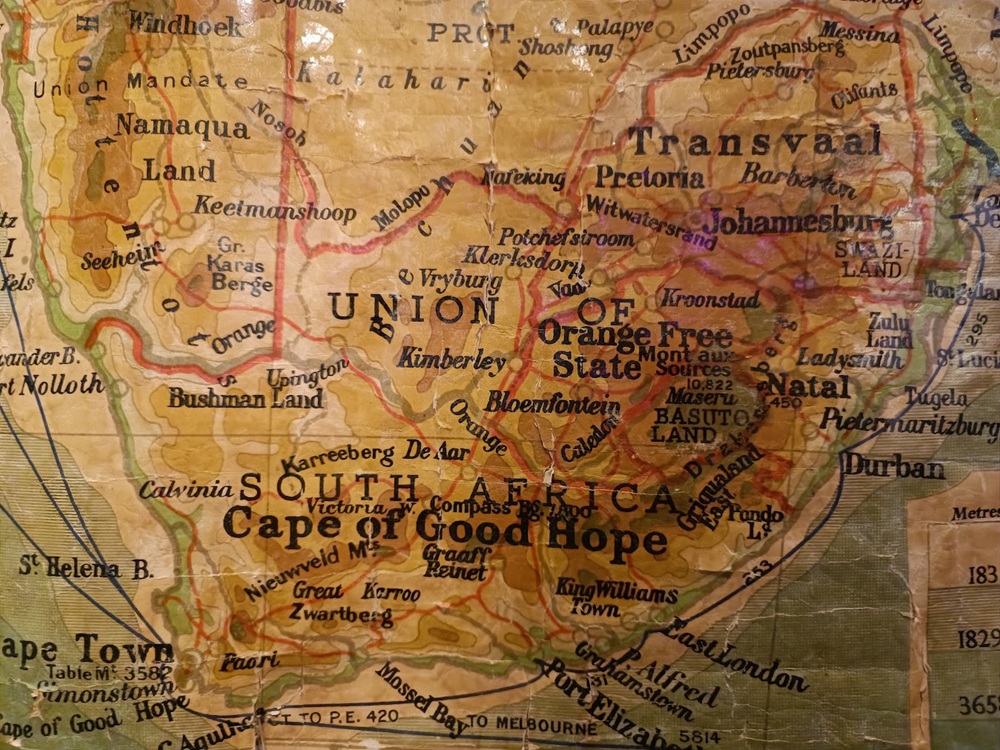
We wanted them to know about South Africa.
We wanted them to love books.
We wanted them to discover history, geography and science through stories.
We wanted them to spend time outdoors.
We wanted them to learn to think for themselves, rather than simply memorise information.
We wanted siblings of different ages to be able to learn together.
And we wanted homeschooling to be something that strengthened family relationships rather than turning parents into exhausted teachers and children into reluctant pupils.
That is why Footprints programmes are multi-age, literature-rich and story-driven.
You don’t need a separate textbook for every child.
You don’t need to spend your day moving from one worksheet to another.
You don’t need to recreate school in your dining room.
Instead, you can gather your children around good books and good ideas and begin your story-driven learning safari.
Start Weaving your own Story Tapestry
One of the things we love most about Charlotte Mason’s philosophy is that education is not presented as a race to get through a syllabus, instead it is a process of building relationships.
Your child meets a person in a story then they encounter that person again in another context.
They discover a place on a map. Later they read something that happened there.
They notice a bird outside. Months later they learn how it uniquely pollinates a specific species of flower.
They read about an historical event and suddenly understand something they have heard their grandparents talk about.
A story leads to a question. A question leads to an investigation. An investigation leads to another book.
Another book leads to another question.
This is how a child’s mind grows.
One connection leads to another…and another…and another.
That is why we think of Footprints as threads, which contribute to a rich tapestry of learning.
We are not trying to give your child every fact they could possibly know.
We are helping you weave together stories, ideas, people, places, experiences and relationships until your child begins to see how the threads fit together.
That is the kind of education we created for our own children and it is the kind of education we have spent more than twenty years developing for South African homeschool families. It’s Gentle, Yet Academically Rigorous: A Return to High-Quality Education
Explore Footprints
If this sounds like the kind of education you want for your family, explore the Footprints programmes designed for different ages and stages.
Your Learning Pathway with Footprints can help you see how the programmes fit together.
Or start with:
- Barefoot Days (ages 4-8)
- Little Footprints (ages 4-8)
- Footprints – The Early Years (ages 8-14)
- Footprints -The Last Century (ages 10-16)
- Nature Quest (ages 8-16)
You can also explore our Afrikaans programmes if you would prefer to homeschool in Afrikaans.
- Kaalvoetpret (4-8 jaar)
- Voetspore 1 – Die Vroeë Jare (8-14 jaar)
- Voetspore 2 – Die Laaste Eeu (10-16 jaar)
- Natuurskattejag 1 (8-16 jaar)
- Natuurskattejag 2 (10-16 jaar)
Your homeschool does not have to look like school.
It can be an adventure… your family discovering the world together…perhaps that is one of the greatest gifts you can give your children.
Books about a Charlotte Mason Homeschool
Educating the Wholehearted Child, Clay and Sally Clarkson
A Charlotte Mason Companion, Karen Andreola
For The Children’s Sake, Susan Schaeffer MaCauley
A Charlotte Mason Study Guide, Penny Gardner
Charlotte Mason Mother Culture
At its heart, Mother Culture is all about homeschool moms actively nurturing their own intellect, passions and inner well-being so they can evolve right alongside their children.
The concept traces back to an 1892 piece in Charlotte Mason’s publication, The Parents’ Review: If “children are born persons,” mothers are complete persons too.
We are not just educators or caretakers, but is this just another thing we must do in our already busy lives or what?