
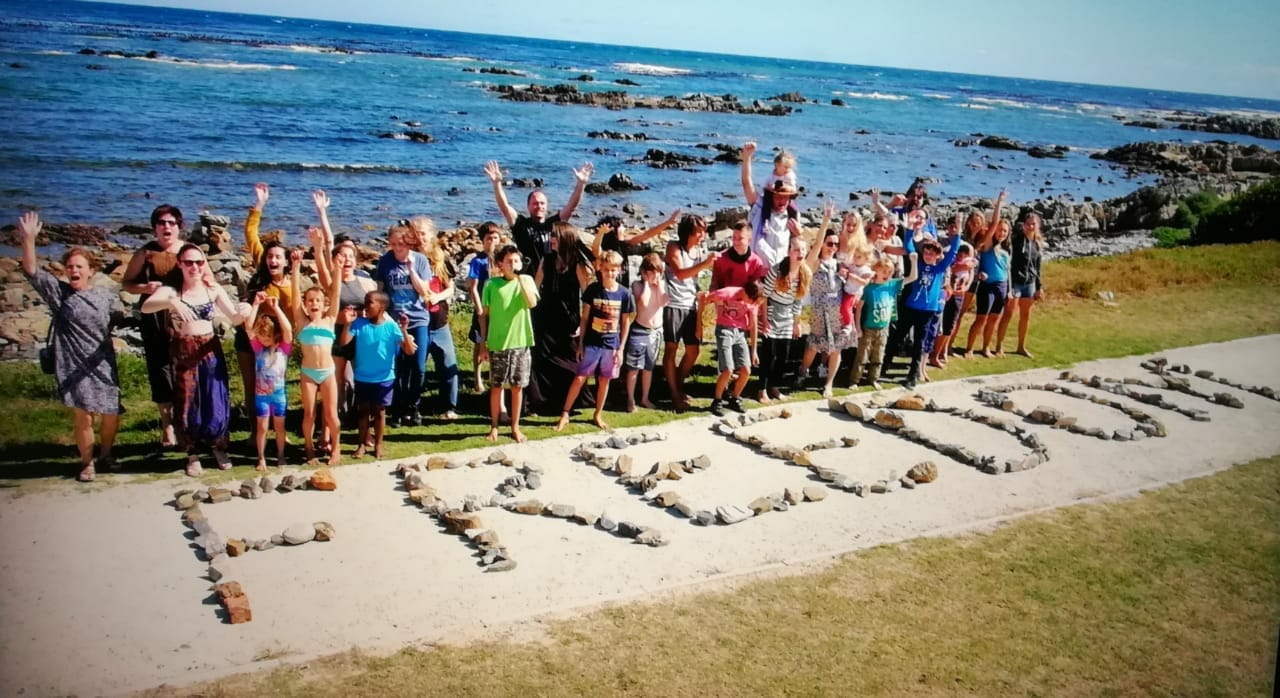
Discover why South African families choose Footprints homeschool curriculum for literature-rich learning, living books, family learning and a Charlotte Mason-inspired education.
Choosing a homeschool curriculum is about much more than finding a collection of textbooks and worksheets.
You are choosing how your children will learn, what they will learn about and ultimately, what kind of education you want to create in your home.
Perhaps you have started homeschooling because you want more freedom. Perhaps conventional schooling has not worked for your child or perhaps you simply believe that education should be about more than memorising information for the next test.
Whatever brought you to homeschooling, you may be wondering:
What makes Footprints different from other homeschool curricula?
Footprints was created specifically for South African homeschooling families who want an education that is rich in literature, connected to real life, rooted in South African history and heritage and designed around the way children naturally learn.
It offers a Charlotte Mason-inspired approach to homeschooling, adapted for South African families and it is designed to help you give your children a meaningful, high quality education without having to recreate school at home.
A homeschool education, not school at home
One of the greatest advantages of homeschooling is that you don’t have to reproduce the classroom in your living room. You don’t need hours at a desk, endless worksheets or an online timetable packed from morning until afternoon.
Footprints takes advantage of the freedom homeschooling gives you.
Instead of trying to cover hundreds of disconnected facts, we want children to read, listen, discuss, explore, create, investigate and make connections between what they are learning and the world around them.
Our curriculum draws heavily on the Charlotte Mason tradition of using living books, narration, nature study, history, geography, art, music and meaningful experiences to create a broad and generous education.
Explore the Footprints approach
- The Charlotte Mason Approach – Understand the principles behind the Footprints methodology.
- What is a Living Book? – Find out why Footprints uses literature rather than relying solely on textbooks.
- How Footprints Works – An overview of a typical Footprints homeschool day or week.
- Homeschooling with Footprints – Explore your learning pathway with Footprints homeschooling resources.
1. Literature-rich learning
Children don’t need to learn everything from a textbook. Some of the most memorable things they learn come through stories.
A well-written biography can bring history to life. A novel can introduce a child to another culture or time period. A beautifully written account of an adventurer can make geography fascinating. A story about an inventor can introduce science, perseverance and entrepreneurship without feeling like a lesson.
This is why literature is at the heart of Footprints.
Rather than presenting every subject as a collection of facts to memorise, Footprints uses carefully selected books and stories to introduce children to people, places, ideas and events.
Children encounter history through the people who lived it. They encounter geography through the places they explore. They encounter science through the natural world and they encounter big ideas through stories that give those ideas context and meaning.
2. Learn together across multiple ages
One of the challenges of homeschooling several children is trying to teach multiple grade levels at once.
Footprints is designed to make family learning possible.
Instead of every child studying completely separate topics, siblings can often explore the same historical period, geographical region, theme or story together, with activities and expectations adapted to different ages.
This means your eight-year-old and your twelve-year-old can be learning about the same world, even though they are working at different levels.
Older children can develop deeper research and writing skills while younger children listen, narrate, draw, discuss and explore.

This approach saves parents time, reduces duplication and, perhaps most importantly, allows siblings to share an educational experience rather than spending their homeschool years working in isolation.
Homeschooling Multiple Ages: How to Make Multilevel Homeschooling Work gives practical tips from our own experiences of homeschooling large families.
One topic. Different levels. A shared family experience. Choose from our curriculum packages:
English Packages
- Barefoot Days (ages 4-8)
- Little Footprints (ages 4-8)
- Footprints – The Early Years (ages 8-14)
- Footprints – The Last Century (ages 10-16)
- Nature Quest (ages 8-16)
Afrikaans Packages
- Kaalvoetpret (4-8 jaar)
- Voetspore 1 – Die Vroeë Jare (8-14 jaar)
- Voetspore 2 – Die Laaste Eeu (10-16 jaar)
- Natuurskattejag 1 (8-16 jaar)
- Natuurskattejag 2 (10-16 jaar)
3. South African history and heritage matter
Your children don’t live in an anonymous corner of the world. They live in South Africa, with its extraordinary history, cultures, landscapes, people and stories.
A South African child should have the opportunity to discover where they fit into that story.
Footprints deliberately gives South African history and heritage a place in the curriculum.
We want children to discover the people and events that shaped their country, but we also want them to understand that history is not simply a list of dates and famous names.
Our article, History is Boring? Your Family Heritage Is Alive explains that history is deeply personal.
Our families lived through it and some of their actions contributed to where we find ourselves today.
Our history is found in the places where we live, the communities our families belong to, the stories passed down through generations and the choices made by ordinary people as well as famous leaders.
This is particularly important during the homeschool years because homeschooling gives families the freedom to explore history beyond the limitations of a conventional textbook.
Your family’s story is part of history too.
These articles explain the WHY we should study South African history:
These articles explain HOW to study South African History as Homeschoolers
- Making Dead Guys Come Alive: How We Study the History of South Africa
- 6 Reasons Stories are Better than Textbooks
- South Africa Travel – Footprints Around SA
- A South African Garden Route Trip
- Youth Day
Homeschool Curriculum and Resources to Study South African History
Finally, we offer you the TOOLS to do it effectively, including our range of story-driven Social Studies homeschool curriculum packages, printable SA history lapbook projects and South African educational boardgames.
South African History Packages in English
Footprints The Early Years(ages 8-14)
Footprints The Last Century (ages 10-16)
Suid-Afrikaanse Geskiedenis in Afrikaans
Voetspore 1 – Die Vroeë Jare (8-14 jaar)
Voetspore 2 – Die Laaste Eeu (10-16 jaar)
More South African History Homeschool Resources
4. A Charlotte Mason-inspired education
Footprints draws inspiration from the educational philosophy of Charlotte Mason, particularly her belief that children are persons and deserve an education that gives them access to a wide range of ideas and experiences. Charlotte Mason was an educational pioneer in the late 19th century but her ideas, now tried and tested for decades, and proven by modern neuroscientific research, are extremely popular in the homeschool movement.
This influences the way we approach:
- living books
- reading aloud
- narration
- nature study
- history
- geography
- art and music
- habit formation
- short, focused lessons
- developing a love of learning
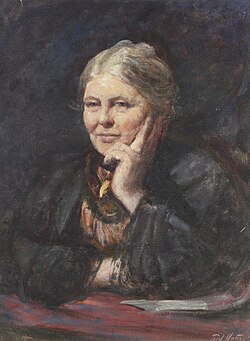
Footprints is not simply a reproduction of a nineteenth-century British curriculum, however, it has been developed for South African homeschooling families, with South African history, geography, culture and educational requirements in mind.
In our article, The Researched Advantage of Charlotte Mason Homeschooling in South Africa Today you will see that modern neuroscience and educational research now confirm what Charlotte Mason taught long ago that “living books”, nature study, short lessons and habit training create more successful learning, calmer homes and children who truly love to learn.
- What is the Charlotte Mason Method? Find out more about:
- Charlotte Mason Homeschooling in South Africa
- What is Narration?
- Living Books vs Textbooks
- Why Do Nature Study?
- Footprints Nature Quest for Homeschoolers
5. Education that connects the dots
Real life doesn’t divide itself neatly into school subjects and this is why we use a unit study approach to learning, where multiple topics or subjects are interlinked.
For example, a child studying The Great Trek might encounter history, geography, economics, politics, technology, agriculture and human relationships all within the same story.
A study of South African wildlife can lead to science, geography, conservation, drawing, writing and discussions about stewardship.
A biography can introduce history while also teaching perseverance, leadership and character.
Footprints looks for these connections.

Instead of treating every subject in isolation, we want children to see that knowledge is connected.
The result is an education that feels more like discovering the world and less like completing a list of school subjects. When different subjects are explored in a context that makes them relevant and interesting, the learning is much more effective and enjoyable too!
6. Learning that develops curiosity
The goal of education should not be to produce children who can remember the most facts. It should help children become people who want to know more.
As Charlotte Mason declared, “There is no education but self-education.”
A child who finishes a lesson asking another question has already begun to learn something important.
Footprints encourages curiosity by introducing children to fascinating people, stories, places and ideas and then giving them opportunities to explore further.
We want children to develop the habit of asking:
- Why?
- How?
- What would happen if…?
- Who was involved?
- What can I discover for myself?
That curiosity becomes increasingly valuable as children grow older and take greater responsibility for their own education.
7. More than academics
Education is not only about academic achievement. Homeschooling gives families an opportunity to develop the whole child.
- Reading good books exposes children to different perspectives and moral choices.
- History helps them understand the consequences of human decisions.
- Nature study encourages observation and wonder.
- Art gives them opportunities to create.
- Family discussions develop communication and reasoning.
- Practical activities teach skills that cannot be learned from a worksheet.
The daily rhythms of family life, even with countless interruptions, provide countless opportunities for children to develop responsibility, independence and good habits.
Footprints is designed to give children a broad education rather than simply a collection of academic credits. It builds a strong academic foundation for any further study options at high school level and beyond.
The Hidden Blessing of Homeschooling
Raising Men and Women of Character
An Educational “Pie” – A Recipe for Holistic Homeschooling
Why Footprints is Better than CAPS for South African Homeschoolers
8. Designed for Homeschooling in South Africa
There are many excellent homeschool resources available internationally but South African families often need to ask an additional question:
How does this fit our context?
Footprints was created with that question in mind.
Our curriculum takes the South African context seriously, including South African history and heritage and the educational requirements relevant to South African homeschoolers.
You don’t have to spend hours trying to take an overseas curriculum and make it relevant to your family or a curriculum designed for the structure of the classroom or online class and then adjust it to suit the flexible routines in your home!
Footprints gives you a foundation designed for homeschooling in South Africa that meets and exceeds the requirements of the Department of Basic Education for specific subjects.
9. How is Footprints different from CAPS?
If you are moving out of the traditional school system, you may be wondering whether choosing a different educational approach means abandoning academic standards.
It doesn’t.
Footprints takes the requirements of South African education seriously while approaching learning differently.
Rather than asking only: What facts must my child know?
we also ask:
- What kind of person is my child becoming?
- Can they communicate what they have learned?
- Can they make connections between ideas?
- Can they think for themselves?
- Are they developing a genuine interest in learning?
This is one of the most important differences between following a curriculum and receiving an education.
This article, Gentle Yet Academically Rigorous: A Return to High-quality, Personalised Education explains how using a research-informed approach Footprints offers a gentle yet academically rigorous homeschool framework, which is rooted in rich literature, narration and personalised learning. It offers families a premium education that equips children for tertiary-level study and the demands of the 21st century.
Footprints vs CAPS: What’s the Difference for South African Homeschoolers?
The short answer is that Footprints covers and goes beyond the recommended CAPS content for the areas it teaches, but it uses a completely different approach to learning. CAPS is a prescribed, grade-based curriculum designed primarily for classroom education. Footprints is a flexible, literature-rich homeschool curriculum designed to help families learn together through stories, living books, hands-on experiences and meaningful connections. This article highlights and explains the differences.
10. Why Footprints instead of online schooling?
Online schooling can provide structure and convenience, but it is not the only way to educate a child outside the traditional classroom.
Footprints gives parents another option. You remain actively involved in your child’s education while the curriculum provides the structure, resources and direction you need.
There is no need to recreate a classroom through a screen.
There is room for reading together on the sofa, exploring outside, visiting museums, talking around the dinner table, pursuing your child’s interests and adjusting your day when family life requires it.
Homeschooling doesn’t have to look like school.
And it doesn’t have to resemble online school either. In fact, the research shows it shouldn’t!
We love the saying: “There is no app, like your lap!”
Footprints vs Online Schooling
The Hidden Risks of Online Schooling for Younger Children
Considering online school for your child? Discover the hidden risks of screen-based learning and why a story-driven, relationship-centred approach offers deeper, more meaningful education.
Homeschooling Shouldn’t be Heavy-going!
Homeschooling should not feel heavy or overwhelming. If your current curriculum feels too content-heavy or rigid, discover a simpler, more flexible approach while still maintaining accountability
11. You don’t have to be a certified teacher
One of the most common fears parents have when they begin homeschooling is:
“But I’m not a teacher. How am I supposed to teach my children?”
You don’t need to know everything your child will ever need to learn. As we frequently tell parents:
You might not be CERTIFIED to teach a class of 30+ children, but you are most certainly QUALIFIED to guide the education of your own children at home.
You need a good curriculum, the willingness to learn alongside your child and the confidence to take responsibility for their education. In essence, you become a co-learner and their greatest cheerleader!
Footprints gives you a framework to work from so that you don’t have to spend your evenings planning an entire curriculum from scratch. Instead, you can concentrate on what matters most: sharing the learning journey with your children.
Why Homeschooling Moms are Better Than Teachers
We highlight seven reasons homeshooling moms are highly successful at helping their children learn.
10 Tips for Worried Homeschool Moms
Read solutions for concerns and real problems that homeschooling parents face.
Am I Doing Enough? Homeschool Self-assessment
Simply by asking this question, which we all do, shows we are diligent and concerned parents and we generally ARE doing enough, despite the many irregularities of our homeschool days.
What Kind of Homeschool are You Trying to Create?
As we said before, choosing a curriculum is not just about selecting textbooks, it is about deciding the environment, values and atmosphere you want in your home.
Before deciding on a course of action, it helps to pause and ask: “What kind of learning environment am I actually trying to build?”
Footprints might not be the right fit if you want to:
- Outsource the responsibility for your child’s education or hand it over entirely to a screen or a tutor.
- Recreate the rigid classroom system at home, complete with strict timetables, desks and isolated subjects.
- Measure progress solely through worksheets, tests and filled workbooks rather than real understanding and engagement.
- Use a passive, “box-checking” curriculum that does all the thinking, decision-making and heavy lifting for you—or, on the opposite extreme, let your child choose absolutely everything without guidance.
- Find the cheapest option available, rather than investing in a rich, long-term educational foundation for your family.
Is Footprints the right homeschool curriculum for your family?
A Footprints curriculum may be a good fit if you want:
- a South African homeschool curriculum
- literature-rich learning
- a Charlotte Mason-inspired approach
- living books rather than textbook-heavy learning
- opportunities to read aloud together
- multi-age family learning
- South African history and heritage woven into your education
- learning that connects different subjects
- time for nature, creativity and exploration
- a curriculum that supports the freedom of homeschooling
- an education that values curiosity and independent thinking
- share meaningful experiences and make memories together
- maintain flexibility within a framework that supports family life
Footprints doesn’t replace the parent, it equips you.
We provide the roadmap, rich literature and guidance so you can take active ownership of your child’s learning journey with confidence, clarity and joy.
Different families need different approaches.
The important thing is finding an educational approach that fits your children, your family and your reasons for homeschooling.
Start exploring Footprints
If you’re wondering whether Footprints could work for your family, you don’t have to make the whole decision at once.
Start by exploring the approach.
Discover how Footprints works
The Charlotte Mason Approach: Learn about the educational philosophy behind Footprints.
Literature-Rich Learning: Discover the Benefits of Literature-based Learning and why stories and living books are central to our curriculum.
Homeschooling Multiple Ages: See how family learning can make homeschooling several children simpler.
South African History & Heritage: Explore the South African resources available through Footprints.
Footprints vs CAPS: Understand how Footprints compares with the traditional CAPS approach.
Footprints vs Online Schooling: Consider the differences between homeschooling with a curriculum and enrolling in an online school and consider The Hidden Risks of Online Schooling for Younger Children
Find the Footprints curriculum for your family
Whether you are just beginning your homeschool journey or looking for a curriculum that better reflects the kind of education you want for your children, Footprints gives you a place to begin.
Explore the Footprints curriculum:
English Packages
- Barefoot Days (ages 4-8)
- Little Footprints (ages 4-8)
- Footprints – The Early Years (ages 8-14)
- Footprints -The Last Century (ages 10-16)
- Nature Quest (ages 8-16)
Afrikaans Packages
- Kaalvoetpret (4-8 jaar)
- Voetspore 1 – Die Vroeë Jare (8-14 jaar)
- Voetspore 2 – Die Laaste Eeu (10-16 jaar)
- Natuurskattejag 1 (8-16 jaar)
- Natuurskattejag 2 (10-16 jaar)
The goal isn’t to make homeschooling look like school.
The goal is to help you make the most of the freedom homeschooling gives you.