
Every August, South Africa observes Women’s Month. This is a time to reflect on the courage, resilience and strength of South African women, but for homeschoolers, this observance offers a deeper opportunity: to explore our nation’s history, spark critical conversations and instill values of justice, unity and civic responsibility in the next generation.
While mainstream narratives often reduce Women’s Month to slogans or superficial celebrations, South African homeschoolers can reclaim this time by anchoring it in the rich legacy of the 1956 Women’s March to the Union Buildings, when over 20 000 women of all races stood together to say “Wathint’ Abafazi, Wathint’ Imbokodo!” (You strike a woman, you strike a rock!)
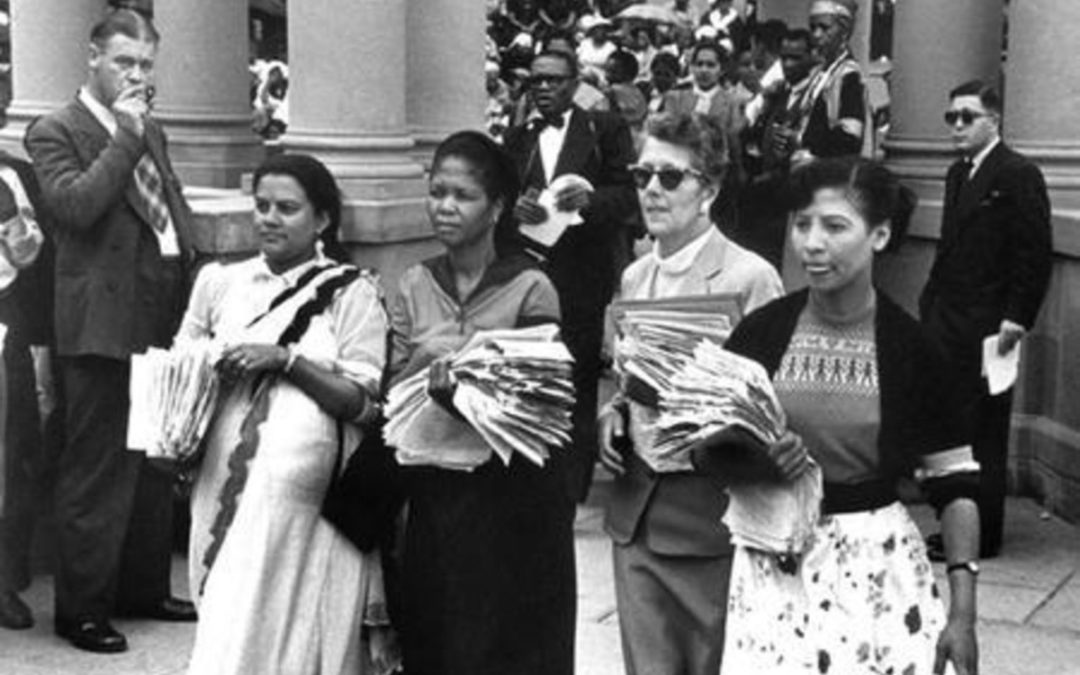
The leaders of the Women’s March to the Union Buildings on 9 August 1956
Here’s how to commemorate this pivotal moment meaningfully in your homeschool (or classroom):
1. Start with the Story: Teach the 1956 March as a Landmark in SA History
Tell your children the story of Lilian Ngoyi, Helen Joseph, Rahima Moosa, and Sophia Williams-De Bruyn, the ordinary women who did something extraordinary. They marched against the oppressive pass laws that restricted the movement of black South Africans, peacefully submitting petitions and refusing to be silenced.
Use picture books, documentaries, or oral history clips to bring the event to life. For younger children, act it out with dolls, draw scenes from the march or write a simple newspaper article as if reporting from that day.
2. Link it to Broader Themes of Freedom and Unity
This is not just “women’s history”, it’s South African history. The Women’s March wasn’t only about gender rights; it was a powerful act of civil resistance against racial injustice. Use it to teach about apartheid, civil courage and the role of non-violent protest in bringing about change.
Ask your children:
- What were the pass laws?
- Why did women choose to protest them?
- How did people of different backgrounds work together?
Encourage older children to research and present on other resistance movements in SA history and compare them to global civil rights events.
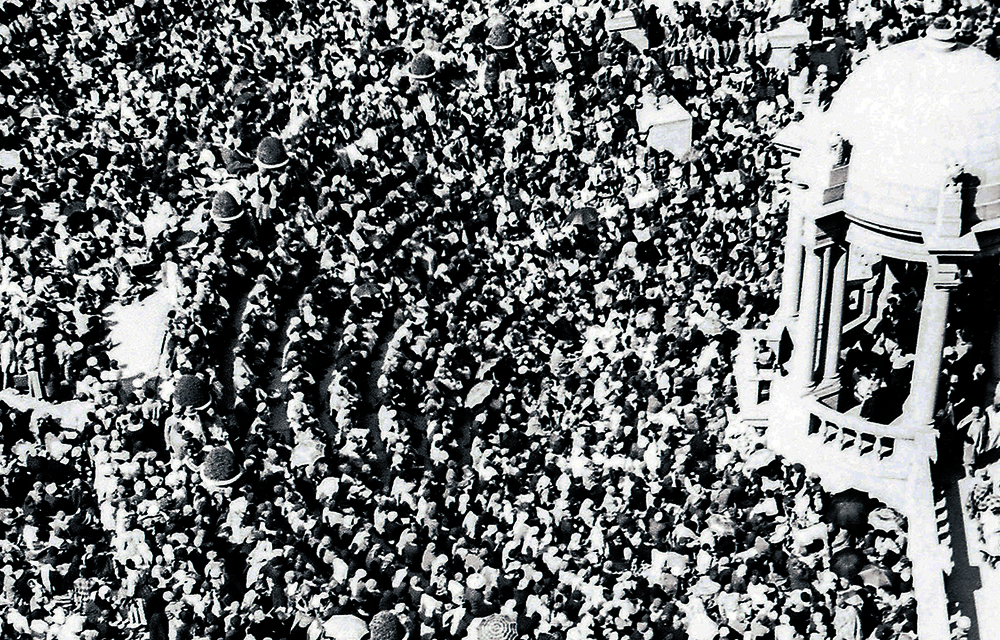
The Women’s March to the Union Buildings in August 1956
3. Interview the Women in Your Life
Get your children to interview mothers, grandmothers or family friends about what it was like to grow up in South Africa during different decades. Do they know that white women were only given the right to vote in South Africa by the Women’s Enfranchisement Act, 1930. The first general election at which white women could vote was the 1933 election. What challenges did the women in your family face? What opportunities opened to them after 1994? What do they remember about the Women’s March or Women’s Day?
This oral history project connects children to living history and helps them see that ordinary people shape our nation’s story.
4. Create a Timeline of Women’s Contributions to SA Society
Go beyond politics and include artists, writers, scientists, activists, teachers, athletes and mothers who made a difference in their homes and communities. Let your children research and create a poster, digital presentation or even a short play honouring these often unsung heroines.
Suggestions:
- Miriam Makeba (music and activism)
- Dr. Mamphela Ramphele (medicine and education)
- Helen Suzman
- Thuli Madonsela
- Your own mother or grandmother (life experience and resilience)
5. Read South African Stories by or about Women
Choose local literature that features strong female characters or is written by South African women. Storytelling is a powerful way to build empathy and pride in our heritage.
Consider these options:
- Journey to Jo’burg, Beverley Naidoo
- Long Walk to Lavender Street, Belinda Hollyer
- Her Own Two Feet, Meredith Davis and Rebeka Uwitonze
- African Princess: The Amazing Lives of Africa’s Royal Women, Joyce Hansen
For younger children, explore local folktales or biographies of South African heroines.
- Mama Africa!: How Miriam Makeba Spread Hope with Her Song, Kathryn Erskine
- Wangari’s Trees of Peace, Jeanette Winter
- One Plastic Bag: Isatou Cessary and the Recycling Women of the Gambia, Miranda Paul
- Beatrice’s Goat, Page McBier
- Nya’s Long Walk, Linda Sue Park
And here are a few adult titles for Mother Culture:
- Kisses for Katie, Katie Davis Majors
- Infidel, Ayaan Hirsi Ali
6. Visit a Relevant Site or Virtual Museum
If possible, visit the Women’s Memorial in Pretoria or the Apartheid Museum in Johannesburg. Many museums now offer virtual tours and educational resources, especially in August.
These visits open the door to broader conversations about rights, representation and reconciliation.
7. Hold a Family “Imbokodo Day”
Imbokodo is a Zulu word for ‘rock’. Celebrate the values of courage, resilience and compassion by dedicating a day to community service or a cause your family cares about. Honour the spirit of the women who marched, not with empty praise, but with action.
Here are some ideas:
- Prepare a meal for someone in need.
- Fundraise for a cause led by local women.
- Make care packs for new mothers or elderly women.
- Volunteer time or skills to uplift your community.
8. Discuss What it Means to be an Ally or Advocate Today
Use the momentum of Women’s Month to talk about standing up for others, speaking truth in love and using your voice wisely. Empower your sons and daughters alike to be people of principle, not just people of power.
Ask your teens:
- What causes do you care about?
- How can you make a difference in your community?
- Who in society still lacks a voice today?
9. Write Letters of Gratitude or Advocacy
Have children write:
- A thank-you note to a woman who inspires them
- A letter to a public leader, advocating for change in areas like safety, education or healthcare
- A prayer or poem inspired by the women of 1956
Let them experience the power of written words to move hearts and minds.
10. Celebrate the Strength of Women, Without Reducing Them
Women’s Month is not about girl power or pink cupcakes. It’s about remembrance, respect and resolve. Celebrate the real contributions of women in your family, community and nation.
Remind your children: “You strike a woman, you strike a rock.” That’s not a slogan. It’s a legacy and a calling.
Build Citizens who Care
As homeschoolers, we have the freedom to approach education holistically. Women’s Month is not about following the crowds, it’s a chance to root our children in the rich soil of South African resilience, to connect them to the people who came before and to raise citizens who care.
Let August be more than awareness. Let it be action rooted in honour.
More South African History Resources
South African History Project Files (Lapbooks – English)
Buy these lapbooks as individual digital downloads.
-
 South Africa Today LapbookR195.00
 -
 The 1820 Settlers (Download)R110.00
 -
 The South African War (Anglo Boer War)R110.00
 -
 Gold & Diamonds (Download)R110.00
 -
 The Great Trek (Download)R110.00
 -
 The Zulu (Download)R110.00
 -
 The Xhosa (Download)R110.00
 -
 The French Huguenots at the Cape (Download)R110.00
 -
 The Dutch at the Cape Lapbook (Download)R110.00
 -
 The San of Africa Lapbook (Download)R110.00
Explore More South African History Homeschool Articles

- Why Study the History of South Africa?
- History is Boring. Your Heritage is Alive!
- Making Dead Guys Come Alive: How We Study the History of South Africa
- From “Invisible” to a Validated Cultural Heritage
- 6 Reasons Stories are Better than Textbooks
- Honouring the Legacy of the Women’s March
- South Africa Travel – Footprints Around SA
- A South African Garden Route Trip
- South African History: Homeschool Unit Studies