

Tips for personalised homeschooling Grades 7–9 using an eclectic approach. Discover flexible Footprints programmes for history, science and AHSD high-school credits.
You don’t have to turn your home into a school when your child reaches high school.
If you are starting homeschooling in Grades 7–9, or if you are using Footprints for the first time with a child at early high school level, you may be wondering whether you have missed your opportunity to give your child a relaxed, personalised home education.
You haven’t.
In fact, the Senior Phase can be a wonderful time to step away from the idea that education has to look like school. You can still choose resources that suit your child’s interests, abilities and learning style, work at a sensible pace and bring subjects together through meaningful stories and real-life experiences.
This is the freedom of eclectic homeschooling. Instead of buying one all-in-one curriculum and following somebody else’s timetable from beginning to end, you become the person who decides what your child needs to learn and which resources will help him or her learn it.
You are the master and the curriculum is your tool.
If you are already thinking beyond Grade 9, our guide to High School Homeschooling in South Africa explains how you can continue a personalised home education through the high-school years while working towards recognised qualifications.
What does personalised home education look like in Grades 8–9?
By this stage, your child is becoming a more independent learner and definitely doesn’t need to be taught like a school pupil sitting in a classroom or the online school equivalent.
You can still combine subjects, learn together as a family and choose different resources for different children. You can spend more time on something that captures your child’s interest, move more quickly through something he already understands and provide additional practice where she needs it.
You also don’t have to choose a separate curriculum for every subject simply because your child has entered the Senior Phase.
A literature-rich Social Studies programme can include history, geography, reading, writing, research, art and discussion. A nature-based science programme can include geography, environmental studies, observation, practical work, writing and photography. A good book can become the starting point for an entire afternoon of learning.
This is very different from simply reproducing the school timetable at home.

A Flexible Senior Phase Homeschool Curriculum
For Grades 8–9, we recommend thinking in terms of subject areas rather than rigid grade levels.
Children develop at different rates and homeschool families often have several children learning together. A Grade 7 child and a Grade 9 child may be perfectly capable of studying the same history or science programme together, while working at different levels for Maths, English and other skills.
You can therefore choose resources according to age, ability and readiness, rather than assuming that every child must complete exactly the same material in exactly the same year.
Here is one possible starting point for a personalised Grades 8–9 programme.
| Subject | Suggested resources | How you can use them |
| Social Studies / History | Footprints – The Early Years or Voetspore 1 Footprints – The Last Century or Voetspore 2 (each takes 12-18 months to complete) | A rich, story-based study of early South Africa history and the 20th century, with opportunities for reading, writing, research, geography, discussion, projects, art and more. |
| Science / Environmental Science | Footprints Nature Quest (two years to complete) or Natuurskattejag 1 & 2 | Explore South Africa’s biomes through stories, observation, mapwork, research, practical activities, writing and nature study. |
| English / Language Arts | A suitable literature and language programme | Choose according to your child’s reading, writing and language level rather than simply following his or her school grade. |
| Afrikaans | A suitable Afrikaans programme | Continue developing the language at the level appropriate to each child. |
| Maths | A Maths programme of your choice | Maths is one subject where children generally need to work at their own level rather than as a family group. |
| Other interests and skills | Art, music, technology, coding, photography, foreign languages, entrepreneurship, practical skills and more | Add subjects that fit your child’s interests and future plans. |
You don’t have to do everything.
One of the advantages of an eclectic education is that you can concentrate your family’s time and energy on the things that matter most instead of trying to reproduce every subject offered by a conventional school.
Start with Footprints if you are new to homeschooling
If your child has been attending school and you are only now starting your homeschooling journey, you may feel that you need to find a curriculum that looks as much like school as possible.
We understand why.
A familiar structure can feel reassuring when you are new to home education. Yet you don’t need to recreate school in your home to give your child a thorough education.
Footprints – The Early Years and the sequel, Footprints – The Last Century gives you a ready-made foundation for Social Studies while leaving room for your family to decide how deeply you want to explore each topic. It is a multi-subject, literature-rich programme rather than a textbook and worksheets. Voetspore 1 and Voetspore 2 are the Afrikaans equivalents.
You can read together, discuss what you have discovered, follow interesting questions, research topics further, complete selected assignments and allow your children to demonstrate what they know through writing, narration, projects and practical work.
You don’t have to finish a certain number of pages by Friday afternoon.
You can learn. You can explore. You can slow down when something matters.
That is authentic home education.
What if we are starting homeschooling in Grade 8 or 9?
You haven’t missed the boat.
Older children who are coming out of school may need some time to adjust to a completely different way of learning. They may also need to rebuild confidence, rediscover curiosity or learn how to work independently.
Don’t assume that your first year of homeschooling has to look like a conventional Grade 8 or Grade 9 year.
You can use the resources that are appropriate for your child’s actual level and gradually increase independence as he or she becomes comfortable with home education.
This is particularly useful with Footprints – The Last Century, because the programme is not dependent on a child being exactly a particular age or school grade. It can become a shared family study while individual children complete different reading, writing or research assignments according to their abilities.
What about high school credits?
If your child is approaching high school age, you may already be thinking about the future.
Perhaps you are considering Cambridge, the GED, an American High School Diploma or another matric alternative. You don’t necessarily have to choose that route today, but it is sensible to understand your options before you reach Grades 10–12.
This is another reason an eclectic approach can work so well.
You can build a broad, enjoyable education now while choosing some programmes that can later contribute towards a formal high-school qualification.
Footprints Programmes and the American High School Diploma
The Footprints and Voetspore programmes have been evaluated for credit recognition towards the American High School Diploma (AHSD).
Footprints – The Early Years / Voetspore 1 and Footprints – The Last Century / Voetspore 2 can contribute credits in areas including Social Studies, Language Arts and other subjects, depending on the requirements and how the programme is completed.
Footprints Nature Quest / Natuurskattejag 1 & 2 can also contribute towards AHSD credits. Completion can provide recognition in Ecology and Environmental Science, as well as opportunities for credits in other subject areas. Because the AHSD requires three Science credits, Nature Quest would normally form part of a broader high-school Science plan rather than being the only Science course required.
This gives you an important advantage: the learning you are doing now will not be wasted when your child moves into the last few years of high school.
You can use Footprints as part of a personalised education while also building towards future academic requirements.
Learn more about the American High School Diploma and Footprints.
You don’t have to decide everything at once
One of the biggest mistakes new homeschoolers make is trying to plan the next six or seven years before they have even discovered how their child learns best at home.
You don’t need to.
Start with the child in front of you.
Choose good resources. Why Choose Footprints? Explains why South African families choose Footprints for literature-rich learning, living books, family learning and a Charlotte Mason-inspired education that sets them up for high school success.
Establish a rhythm that works for your family.
Read good books. There are over 20 benefits of literature-based learning that give children a lifelong advantage over their non-read-to peers.
Talk about what you are learning. Give your children opportunities to write, create, investigate and practise what they are learning.
Then, as your children grow, you can gradually introduce greater independence and begin making more specific decisions about their high-school pathway.
The fact that you are homeschooling does not mean that you have to choose between a relaxed, personalised education and academic preparation for the future.
You can have both.
A personalised Grades 8–9 education with Footprints
For families entering the Senior Phase, Footprints can provide the common thread that brings your children’s learning together without forcing every child into the same grade-level box.
- Use Footprints – The Early Years / Voetspore 1 and Footprints – The Last Century / Voetspore 2 for history and Social Studies.
- Use Footprints Nature Quest / Natuurskattejag 1 & 2 for Science, geography and environmental learning.
- Add the Maths, language and other resources that suit each individual child.
Go deeper when something fascinates your family.
Move on when your child has mastered something.
Allow time for reading, practical work, hobbies, sport, family life and simply being a child.
That is the beauty of personalised home education.
You don’t have to follow someone else’s school timetable.
You get to create an education that fits your child and your family.
Your Next Step
- If you are new to homeschooling, start by learning what home education can look like before you start buying curricula: How to Start Homeschooling in South Africa
- If you are already homeschooling and are looking for a flexible curriculum for the Senior Phase, explore:
Footprints – The Early Years / Voetspore 1: A story-driven exploration of the early history of South Africa from the pre-colonial era to the end of the end of the 19th century.
Footprints – The Last Century / Voetspore 2: A literature-rich journey through South African history and the 20th century.
Footprints Nature Quest: A story-driven exploration of South Africa’s biomes, geography and natural sciences.
Natuurskattejag 1 & 2: The Afrikaans version of Footprints Nature Quest, divided into two programmes.
Explore all Footprints products
Recommended products
-
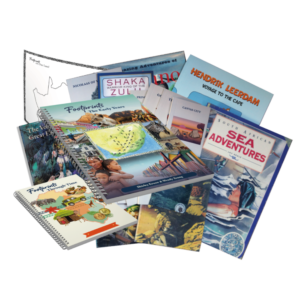
Footprints – The Early Years
R8 300.00 -
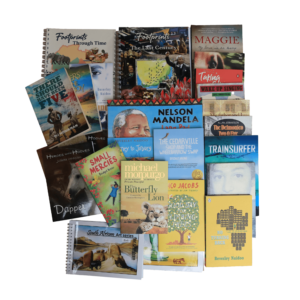
Footprints – The Last Century Diamond Package
R9 820.00 -
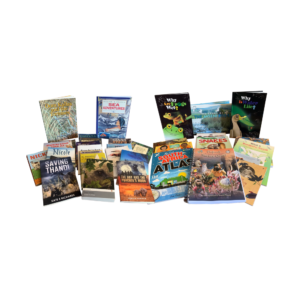
Footprints Nature Quest Classic Pack
R9 430.00 -
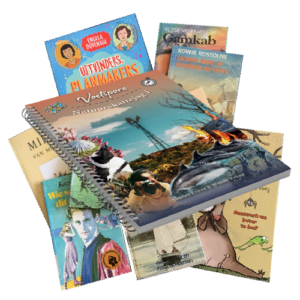
Natuurskattejag 1
R4 910.00 -
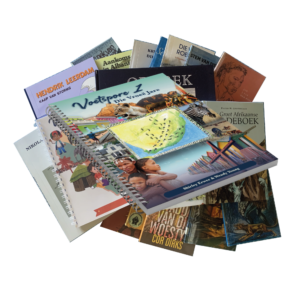
Voetspore 1 – Die Vroeë Jare
R7 175.00 -
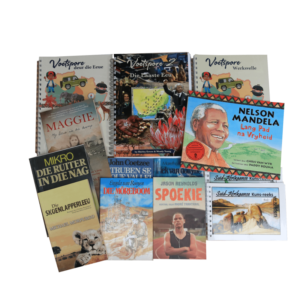
Voetspore 2 – Diamant Pakket
R7 870.00 -
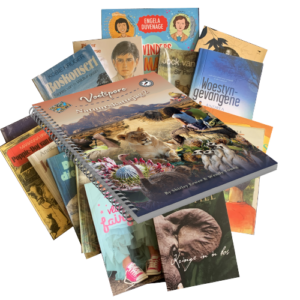
Natuurskattejag 2
R6 050.00