

Discover your family’s place in the story of South Africa with Footprints.
History doesn’t have to be boring but perhaps many of us hated it at school because we were given a textbook version of history: a tidy, sanitised version of events, a collection of dates, a few important names, questions with predetermined answers and a test.
…but real history is anything but boring.
Why do History Textbooks Make History Boring?
One of the problems with traditional history textbooks is that they often make the past appear far more settled and straightforward than it really was.
The difficult questions have already been answered. The controversy has been resolved. The conflict has been categorised and historical characters are judged as heroes, villains or reduced to mere names in a paragraph.
Often textbooks also present a very top-down version of history, concentrating on presidents, politicians, kings and generals while giving less attention to women, children, slaves, prisoners, workers, families and ordinary people whose lives were also shaped by historical events.
Textbooks often speak with such certainty that children can easily assume that this subject is simply about learning what happened but we know that history is not just a set of bullet points and snippety facts to memorise.
History is an ongoing investigation. Students of history examine evidence, compare accounts, question sources and consider different perspectives. They don’t always agree and our understanding of the complexities of the past can change as new evidence comes to light or as we ask new questions.
As we explain in our article, Why Study SA History? “a community without history is like a person without a memory – incoherent,” and when we find ways to “make dead guys come alive”, history becomes much more interesting than studying for a test.
Real History is Fascinating
Unfiltered history is messy, dramatic and surprising. It is filled with intrigue and scandal, courage and cowardice, heroism and human failure. It is full of unexpected twists, terrible decisions, remarkable discoveries, political obstacles and ordinary people caught up in extraordinary events.
South African history certainly has no shortage of fascinating stories but at Footprints, we believe there is something even more important than making history captivating:
Your children need to know that they are part of the story.
Traditional history asks children to learn what happened.
Footprints helps children discover how we got to where we are today and how the events of the past shaped the country we live in, the culture they belong to and their very own family.
History isn’t only about presidents, politicians and famous battles. It is about people. It is about communities and your family is part of it.
Whatever the story, your people were there.
Your Family is Part of South Africa’s Story
Perhaps your ancestors were living at the Cape. Perhaps they arrived as immigrants. Perhaps they were part of an African community whose history was overlooked in the textbooks you used at school. Some may have arrived as slaves or indentured workers, others may have been orphan girls shipped in to be married off to the enlisted soldiers or colonial officials. Maybe your family moved from one part of South Africa to another in search of work, gold or a new beginning or maybe your family has lived in the same area for generations.
Whatever your story, you have a place in the history of South Africa and discovering that place can change the way your children see history.

History is Personal
At Footprints, children don’t only learn about the history of South Africa. They have opportunities to explore their own family history and cultural heritage.
They can investigate where their ancestors lived, what languages they spoke, what work they did, what traditions they followed and how social and political events shaped their lives.
They can:
- Ask grandparents questions
- Examine old photographs
- Search family records
- Map where their ancestors lived and when they were born
- Collect family stories and heirlooms
- Discover how their family’s story connects with the larger context they are studying
Suddenly, history isn’t something that happened to other people. It’s a story about what happened to people like us, what happened to our own family.

Through a Footprints story, Wendy’s children discovered they were directly related to a French Huguenot who lived at the Cape in the late 1600s.
Shirley’s children discovered that their great-grandfather survived the great flu epidemic of the early 1900s by camping on a mountain outside Queenstown. If he had died then, none of them would be here today.
Her mother has a cousin who was a political prisoner during apartheid and famously broke out of Pretoria Central Prison in 1979. There is even a movie and documentaries about his escape.
Where were your people?
You may be amazed at the connections your children may uncover.
Every Culture Belongs in the Story
South African history is complicated. It contains extraordinary achievements alongside terrible injustices. It includes migration, cultural exchange, conflict, corruption, deceit, slavery and oppression, as well as resilience, innovation, war and reconciliation.
With Footprints, children encounter the beautiful, painful and complex parts of our past. They discover stories of courage and contribution alongside stories of injustice and human failure.
They learn that their own heritage has a place in the story too.
Children from every cultural background can explore and celebrate the contribution of their own heritage while learning about the histories of others.
As we explain in our article, From “Invisible” to a Validated Cultural Heritage, discovering our roots can help children understand that their heritage is not something separate from South African history. It is part of it.
No matter our race or cultural background, our history helps form our sense of identity, belonging and understanding.
When a child can look at the story of South Africa and say, “My people are part of this story,” history suddenly has meaning.
From Memorising History to Belonging to it
This is why Footprints approaches history differently.
We want children to encounter the people who lived through historical events, ask questions, investigate evidence, discover a variety of perspectives, explore historical places, read stories and biographies and uncover the history of their own families.
Most importantly, we want them to understand how all these individual stories fit together to create the South Africa we know today.
Your family didn’t sit outside South African history watching it happen.
Your family lived it.
They made choices. They were affected by events. They contributed to the communities around them. Their decisions helped shape the world your children have inherited.
Now your children are part of the next chapter.
That is why history matters.
And that is why, at Footprints, we don’t just teach children about history.
We help them find themselves in the story.

Choose a Story-driven Footprints Homeschool History Curriculum
-

Footprints – The Early Years
R8 300.00 -
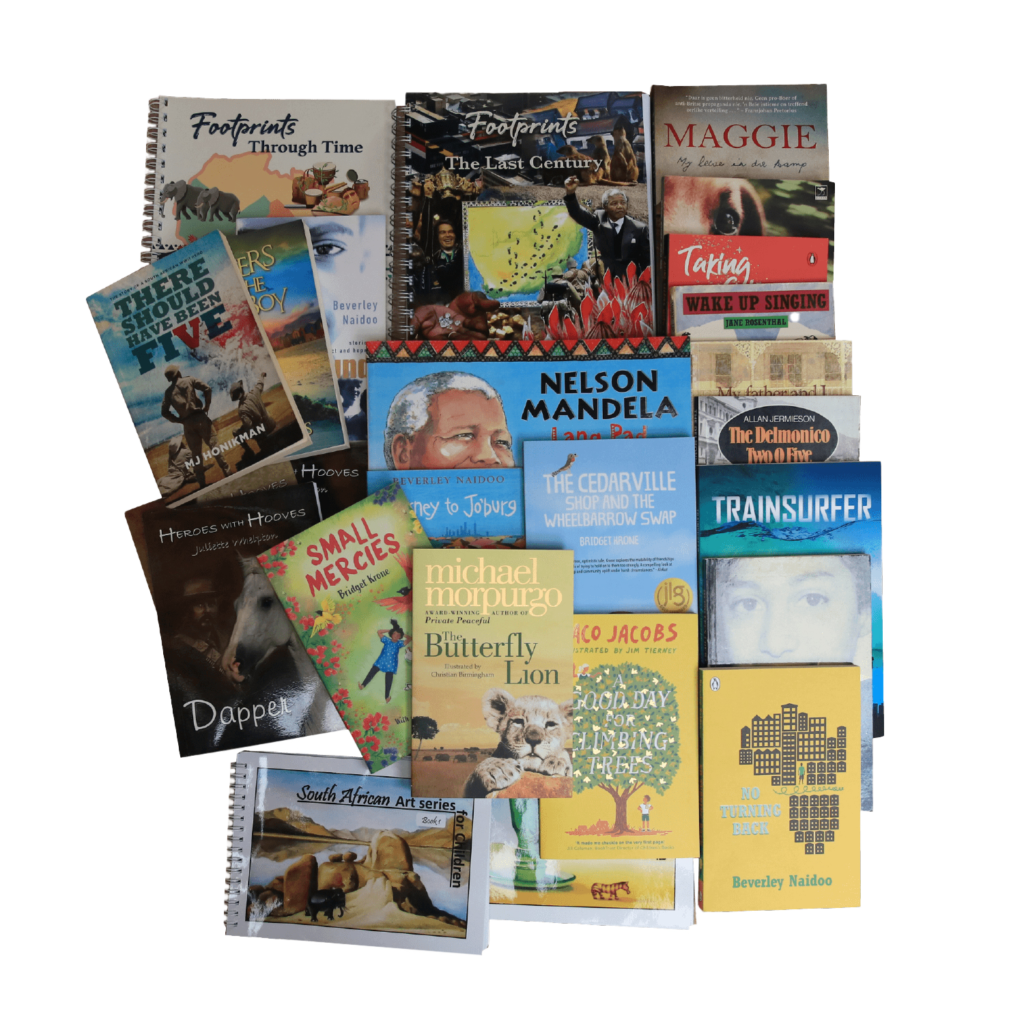
Footprints – The Last Century Diamond Package
R9 820.00 -
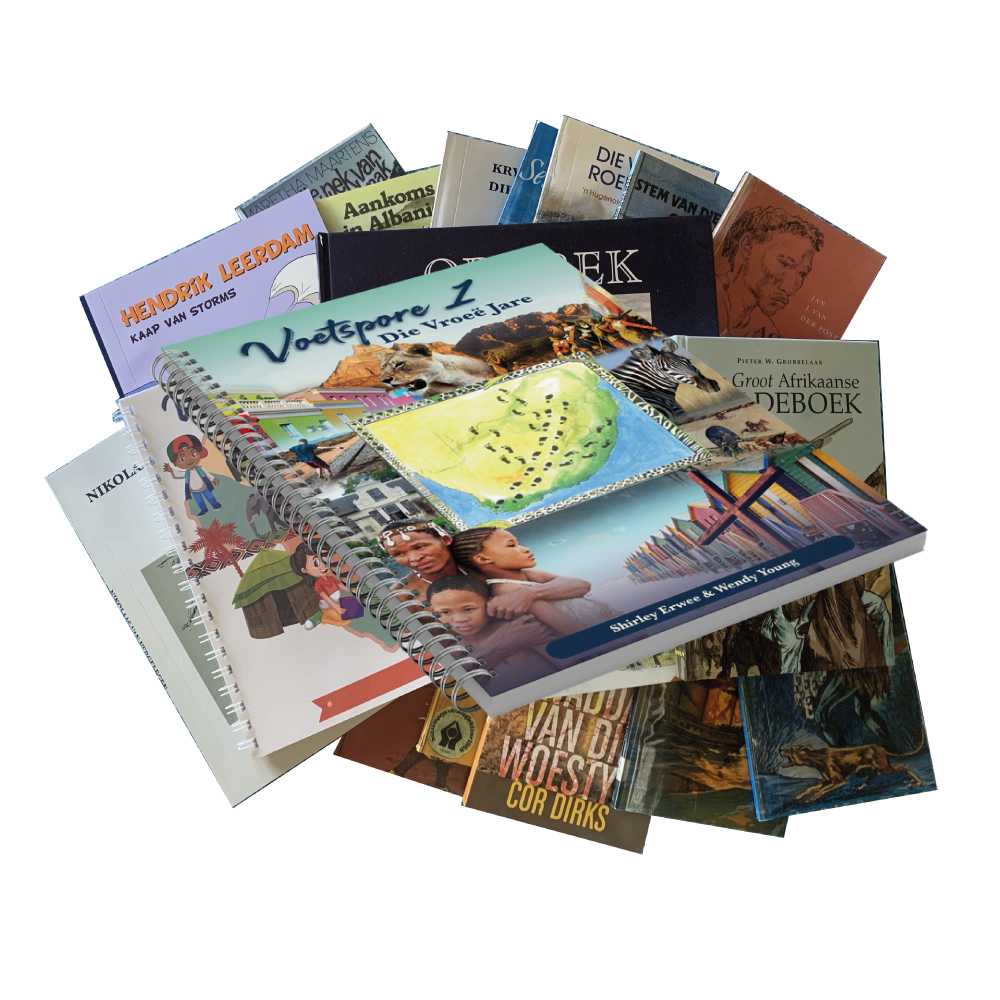
Voetspore 1 – Die Vroeë Jare
R7 175.00 -
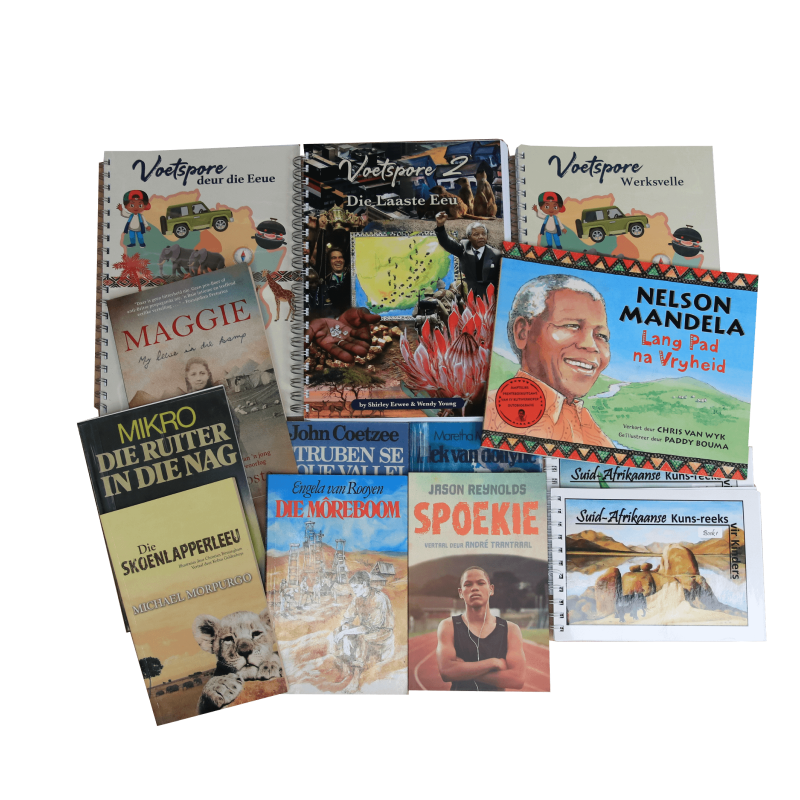
Voetspore 2 – Diamant Pakket
R7 870.00
Explore More South African History Homeschool Articles
- Why Study the History of South Africa?
- History is Boring. Your Heritage is Alive!
- Making Dead Guys Come Alive: How We Study the History of South Africa
- From “Invisible” to a Validated Cultural Heritage
- 6 Reasons Stories are Better than Textbooks
- Honouring the Legacy of the Women’s March
- South Africa Travel – Footprints Around SA
- A South African Garden Route Trip
- South African History: Homeschool Unit Studies