
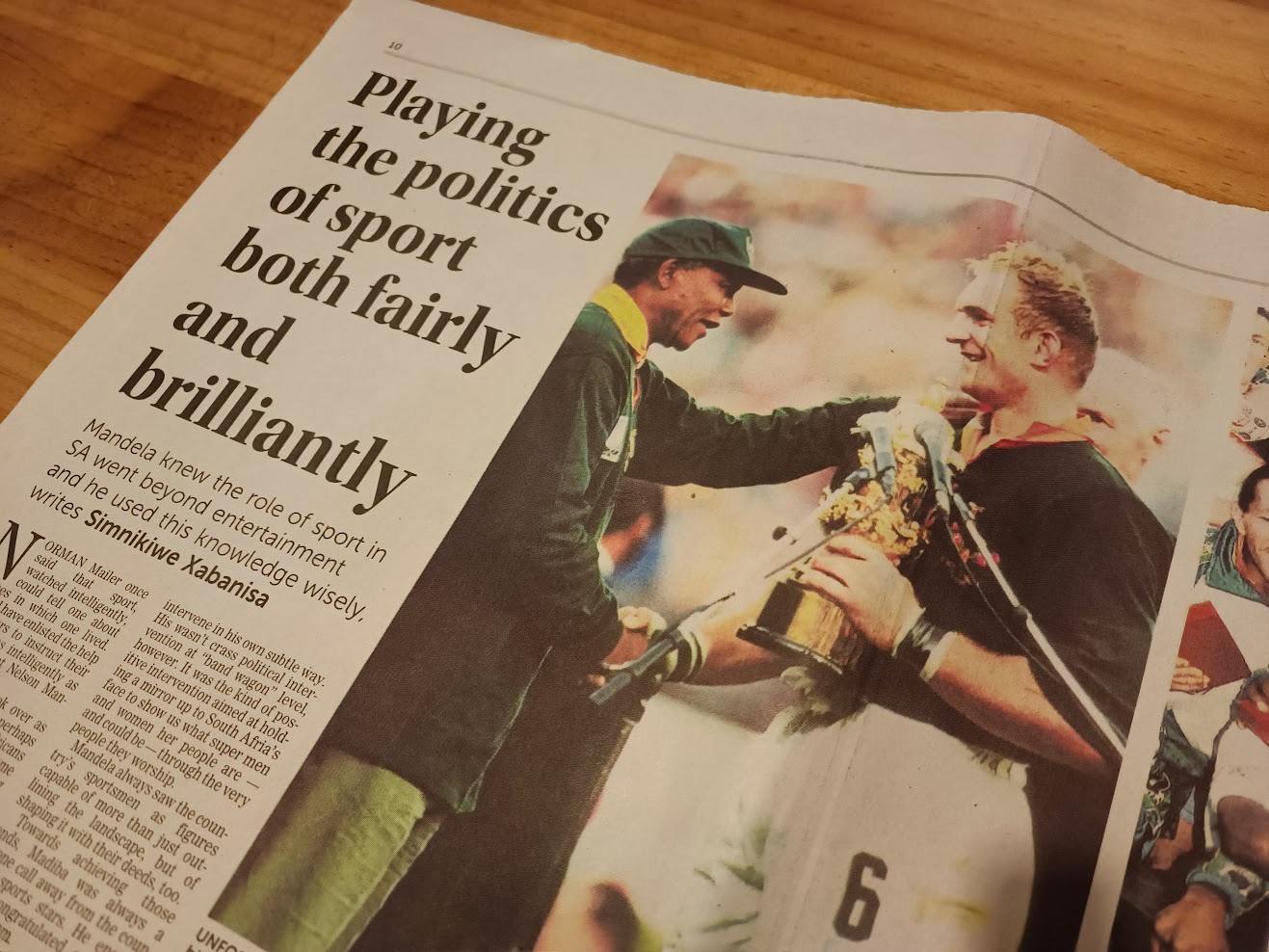
Studying the history of South Africa is a journey towards understanding who we are, where we come from and how our shared past shapes our lives today.
It’s far more than memorising what happened and when it happened. It’s a journey towards giving our children deep “roots” in the soil of their homeland. Many homeschooling families choose excellent international programmes, but without an intentional focus on our local story, children can easily grow up knowing more about foreign nations than their own. That’s why Footprints exists!
By exploring the diverse perspectives, struggles and triumphs that have defined our nation, children naturally develop critical thinking, deep empathy and a meaningful connection to their heritage.
Whether you want to meet the requirements of the national curriculum (CAPS), navigate complex historical bias or raise active citizens, exploring South Africa’s story-rich history equips the next generation with the wisdom and hope needed to build a brighter future together.
“Search in your past for what is good and beautiful. Build your future from there.” ~ Paul Kruger
Why is History Important?
For years people have questioned the importance and relevance of history in the school curriculum. Many feel that there should be a greater emphasis on life skills and vocational education, rather than on such a traditional academic subject that is so open to ideological manipulation by the ruling regime of the day.
We believe that if our purpose in educating our children is to equip them to cope effectively with life in the society in which they live, then we will need to equip them with understanding of themselves and others, their own culture and that of others, moral values and other life skills. They need these insights to be able to truly make a positive contribution to that society.
Understanding the past gives us a clear lens to make sense of our world today. It shows us how the choices, challenges and systems of previous generations have directly shaped the society we live in now.
When we explore history, we develop the insight to spot patterns, learn from past mistakes and make far better decisions for the future.
As historian Kenneth Stampp noted:
“With the historian it is an article of faith that knowledge of the past is a key to understanding the present.”
Ultimately, knowing where we come from equips us to navigate current challenges with wisdom and build a much better path forward.
Other great minds have expressed similar motives for studying history:
“The way in which the world develops has a relation to the way in which it was in the past. A community without history is like a person without a memory – incoherent.”
~Bernard Baylyn of Harvard University
“History cannot give us a program for the future, but it can give us a fuller understanding of ourselves, and of our common humanity, so that we can better face the future.”
~ Robert Penn Warren
“Those who cannot learn from history are doomed to repeat it.”
~ George Santayana
Key Benefits of Studying South African History
Here are some worthwhile reasons to dive into South African history with our children::
- Building Empathy and Walking in Others’ Shoes: Reading literature and historical stories gives children an inside view of the lives of people from different eras and backgrounds.
- “Children’s worlds are expanded when they read literature set in other places and other times, when they learn to care about somebody (whether fictional or real) in another place.” ~ Jessica Powers
- Developing a Sense of Identity and Belonging: Understanding where we come from grounds our children. Learning about the roots of our nation helps them find their own place within our rich, shared cultural heritage. Many people need to make the shift From “Invisible” to a Validated Cultural Heritage
- Understanding our Diverse Society: South Africa is a vibrant mix of cultures, languages and traditions. Exploring our collective past helps children make sense of the multicultural world they live in every day.
- Fulfilling National Curriculum (CAPS) Requirements
Incorporating South African history ensures your home education is “at least comparable with” the Social Sciences objectives set out in CAPS. A story-rich, unit-study approach allows families to fulfill or exceed required knowledge areas (such as indigenous kingdoms, colonial shifts and modern democracy) while keeping learning engaging and meaningful. - Cultivating Civic Responsibility and Hope: History shows us both the struggles and the triumphs of our country. Seeing how far we have come inspires our children to become active, caring citizens who want to make a real, positive difference in South Africa’s future.
What about Bias in History?
Because we are all raised in families, cultures and communities that naturally give us a biased view of history and humanity, encountering different viewpoints and subjective interpretations in our reading is inevitable. Our goal is to recognise our own perspectives and then examine those of others.
We teach children that every historical account is written through somebody’s human experience and may reflect their worldview, their experiences, interpretations and telling of what happened.
How to Teach Critical Thinking
Teaching children to think critically about history starts with helping them realise that no single book or author has a complete monopoly on the truth. When reading historical accounts or literature together, encourage your children to ask simple yet powerful questions:
- Who wrote this and when? Understanding an author’s background, culture and era helps children see where the writer is coming from.
- What might be missing from this story? Ask your children to consider whose voices or perspectives aren’t being heard in a particular narrative.
- Why did the author write this? Help them identify whether a piece of writing was meant to inform, persuade, entertain or present a specific point of view.
By teaching children to compare different accounts of the same event and read with a healthy dose of curiosity, they learn that history isn’t just about accepting facts blindly, it’s about gathering clues, examining perspectives and weighing evidence to uncover the bigger picture.
“Long after we have finished a story a conversation often spontaneously starts going back to something in one of the stories, I can see that the cogs are turning and they’re thinking!” ~ Wendy Botha, Footprints homeschool mom
Our Approach to Addressing Historical Bias
At Footprints, we don’t believe in sweeping historical bias under the rug or trying to present a sanitised, single-narrative version of South Africa’s complex past. We acknowledge that our own lived experience may bring its own biases as will yours.
I have learnt much and have been challenged to revisit some of my own beliefs, interpretations and understandings. I feel liberated! ~ Charmaine Ressell, Footprints homeschool mom
We’ve had customers from various ethnic and religious groups across South Africa use our products without complaints about bias. The reason for this is simple: rather than ignoring or hiding bias, we bring it out into the open and turn it into a valuable learning moment.
When a book or resource reflects a specific historical view, we use it as an opportunity to prompt family discussions about perspective, context and critical thinking. By guiding children to spot assumptions and question what they read, we help them develop the discernment they need to evaluate information thoughtfully, not just in history lessons, but throughout their lives.
We love the following quote, which sums up what we believe is an important skill that parents need to teach their children:
“Everybody sees reality in a different way. To really get the facts, we have to look at all perceptions; discover the assumptions, biases, and truths in those perceptions; and then discover ‘the facts.’ ……Historians, like writers and photographers, influence the way people see the world.
We can prevent people from seeing truth or we can depict truth as close to reality as possible. No matter how truthful and honest, each historian presents a biased version of the truth. Those who write have a responsibility – to be as accurate as possible, to understand their biases and attempt to leave them behind. Those who read have another responsibility – to question when information seems lacking, to read with a grain of salt, and to demand the whole story.”
~J. Powers, The Bang Bang Club and Journalism Ethics, 2002
Dealing with Bias in History
Watch our short video clip, where we, Wendy and Shirley, discuss how we handle bias as homeschoolers.
How does Footprints Focus on the History of South Africa?
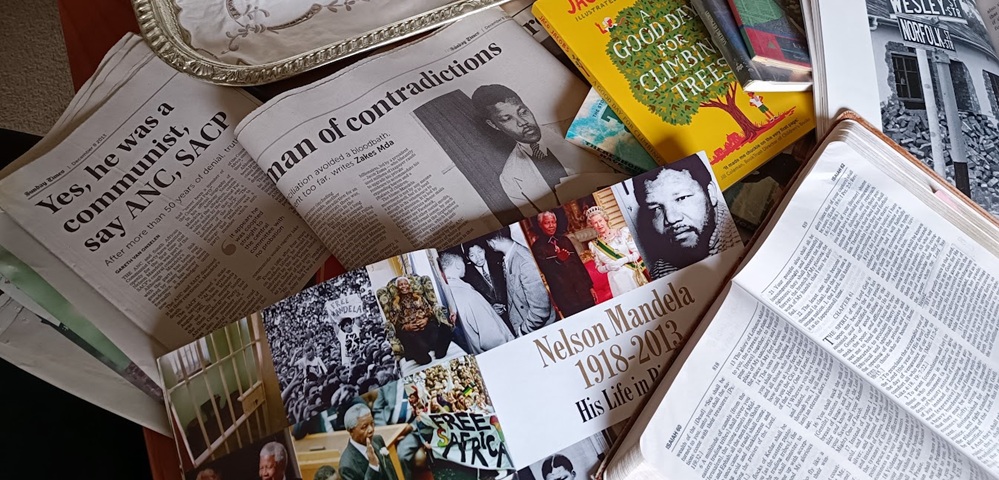
At Footprints, we believe that history comes alive when it is told through compelling stories rather than impersonal textbook summaries with plain facts and lists of dates.
Our story-driven programmes use high-quality English or Afrikaans children’s literature to take your family on an engaging journey through time. By reading well-crafted historical fiction and narrative non-fiction, students are able to see through the eyes of characters from different eras, experiencing the difficulties, victories and everyday lives of the people who shaped our country.
Instead of isolating history into a single textbook, our literature-based unit studies integrate social studies, geography, culture and critical thinking into a seamless learning adventure. We cover South Africa’s story chronologically, from the early indigenous inhabitants and colonial conflicts to the struggle for freedom and the modern, multi-cultural democracy we live in today.
Most importantly, our goal is not just to teach what happened in the past, but to inspire real hope for the future. We aim to equip students with a deep appreciation for their heritage and a clear sense of how they can actively contribute to their communities and nation. Our article, History is Boring. Your Heritage is Alive! explains more about how we make learning history personal and meaningful to our children’s lives today.
Here is how various curriculum packages we offer are part of that process:
Little Footprints – South Africa in Stories
(for ages 4-8) starts by gently introducing children to contemporary South Africa – the people, the culture, animals and natural environment.
Footprints – The Early Years / Voetspore 1 – Die Vroeë Jare
(for ages 8-14) shows the maturing child, the first people, then the various groups of settlers and the ensuing wars and battles.
Footprints – The Last Century / Voetspore 2 – Die Laaste Eeu
(for ages 12-16) continues from here through time and illustrates how those first few hundred years of the history of South Africa affected the last 100 years. However, this curriculum does not leave young adults without hope for their nation. They walk away with a very clear idea of what they can do to make a positive difference in our country.
South African History Lapbook Projects
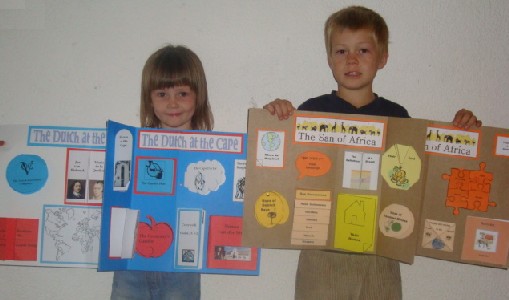
We also offer a range of nine individual South African History File Folder Projects
(lapbooks), focusing on different historical eras and population groups in South Africa. The lapbooks are available in English and Afrikaans.
- A perfect match for ANY curriculum or stand-alone history studies
- Instant access to in-depth hands on unit studies in printable ebook format
- A convenient, no-mess-no-fuss way to teach your children the history of South Africa!
Ready for a rich, story-driven tour of South Africa’s history?
Explore our full range of literature-based unit studies and interactive lapbook projects today, and help your children build strong roots, critical thinking skills and a bright vision for the future.
On the respective pages linked above, you will find detailed curriculum descriptions as well as sample pages to help you determine if each programme is the right fit for your family. Contact us if you need further guidance or advice.
