
Discover the power of stories and family mantras to train the hearts of your children instead of destructive behaviour modification techniques.
Stop using rewards and punishment to coax kids to obey, stop the yelling, stop sibling rivalry from destroying family unity, deal with lies and manipulation and get selfishness under control in your kids. Develop a new culture of honour and respect and clear communication in your family and it will never be the same again. This is the heart work of parenting.
Warning – instant results are not guaranteed. Change requires persistence.

Discover the roots of common discipline issues that plague most families and follow the tried-and-tested strategies to resolve challenging family relationships and sibling rivalry.
The passage in the block below appeared in one of our Footprints newsletters. (Do sign up!)
A mother asked us to please go into greater detail and so this article gets to the heart work of parenting more effectively.
Savouring the beautiful moments, embracing the tough ones
Home education gives us some really special times with our children, opportunities to make beautiful memories, but also just plenty of time to savour the everyday moments – simple things like having an affectionate youngest child, when all the others seem to have outgrown the need for hugs and cuddles is priceless or a child begging you to read aloud, when he is quite capable of reading a story himself. These are moments to treasure.
But there are also hard moments. Like the times when one child won’t show consideration or respect for another child, because they have both damaged their relationship, when one child provokes the other or plays the victim and accuses parents or other siblings of being biased and unfair.
These sibling conflicts and outbursts of drama are often frustrating and usually at the most inconvenient times, but these are vital relationship issues that you must unravel and resolve together. You must teach your children to be humble and respectful and to treat their sibling relationships with care or else reap the consequences. It’s very easy to step in as the judge and the jury and make a ruling, the greater challenge is to equip children with the maturity and perspective they need to resolve their conflicts themselves.
You don’t find these lessons in any curriculum but they are vital if we want our children to learn to have healthy boundaries and healthy relationships.
Our reader asked us to unpack this short message and provide more detail to help her with her parenting struggles:
“I feel like I spend a lot of my time playing judge and jury between my 9- and 6-year-olds and it’s becoming increasingly difficult to know who is telling the truth these days as they both always say the opposite thing. Any tips on the following would be great:
- Truth-telling/taking ownership of sin
- Dealing with the competitive nature of boys (e.g. always wanting to be first, to the point of shoving big/little brother out of the way to get there first)
- General kindness/respect
- Heartfelt apologies (not just apologising because mom/dad told us to)“
Below are tips to address these four issues and others, along with some short anecdotes which we hope will help the lessons to be ‘sticky’.
If you can find a story, proverb or an analogy of some kind to convey a picture or make an impression on your children, these lessons will be more likely to ‘stick’ and you will have a repertoire of shared meanings to which you can refer when necessary. A few punchy examples will follow below.
If you can’t find moral stories, you can retell the stories from your own childhood or from your children’s relationship. For example, “When my sister threw my hair brush in the toilet on purpose …” or “remember when you smashed your brother’s sandcastle…”
Build up a collection of stories that remind everyone of the lessons your family has shared.
1. Truth-telling/taking ownership of sin
Children usually lie and don’t own up to avoid punishment. The motivation is often fear of the consequences of their words or actions. Sometimes they lie deliberately to manipulate a situation and lay blame on another child or to play the victim, when in fact they were the instigator of a conflict situation.
There are various approaches that you could use depending on the circumstances. You will have to decide which is best or test them and see what is most effective. When children lie, they think they are deceiving you.
Here’s a three-point strategy with some suggestions to demonstrate how to do this. You need to discuss
a) the importance of honesty
b) the consequences of lying
c) the importance of building trust and a reputation for being a person of integrity.
Teach your children these words, so that they have the vocabulary they need to understand future lessons.
Integrity is the quality of being honest and having strong moral principles that you refuse to change.

The Boy who Cried Wolf
- Teach your child that honesty promotes trust. Lying breaks trust. Trust is like a teacup, once it’s broken, you can glue it back together but the crack will always be there. If you have a cracked cup, you can use it to demonstrate this and make the lesson more memorable.
- Tell the child that when a person constantly lies, trust is destroyed. Does he want his mother to think of him as a liar and a cheat, someone she can never take at his word?
- You can read or re-tell the children the Aesop’s fable of the boy who cried wolf. When it really mattered, no one believed him because he had lied too many times in the past. Trust was broken. He had lost his integrity.
- You can point out that you are older, wiser and more experienced than they are and that you can usually see through the lie, so it is pointless lying to cover up sin. Tell them that you can guess the truth, so they may as well own up.
- You can tell the child that even if you never know the full truth of the situation, you know there is a cover up and he has to live with his own guilt. Older children may understand that if they continually lie, they will eventually get to the place where lying doesn’t bother them anymore and that part of their soul is hardened. The Lord requires that even we as their parents and adults watch over the condition of our souls so that we are not hardened to Him either.
- You could encourage a child who always lies to rather own up by stating that this time, there won’t be punishment or there will be a lesser consequence. Reward honesty in some way, especially when you can see that it was hard for the child.
2. Get to the root of sibling rivalry
You can easily picture this scenario: A family has planned to go on a fun outing together. Everyone is excited and looking forward to the adventure. Then they get to the car. Immediately the children start bickering over who sits in which seat. The argument deteriorates into name calling and eventually one child is in tears and the other is sulky and defiant. What was intended to be a fun experience has started off badly and even the parents are left feeling annoyed, frustrated and desperate.
Sibling rivalry, a common experience in many families, arises from a mix of factors, most commonly the following:
- competition for parental attention
- jealousy, and
- a perception of inferiority that leads to one-upmanship.
It might also be due to individual differences in personality and temperament, and the impact of major life changes, like the birth of a baby sibling.
Jealousy and resentment
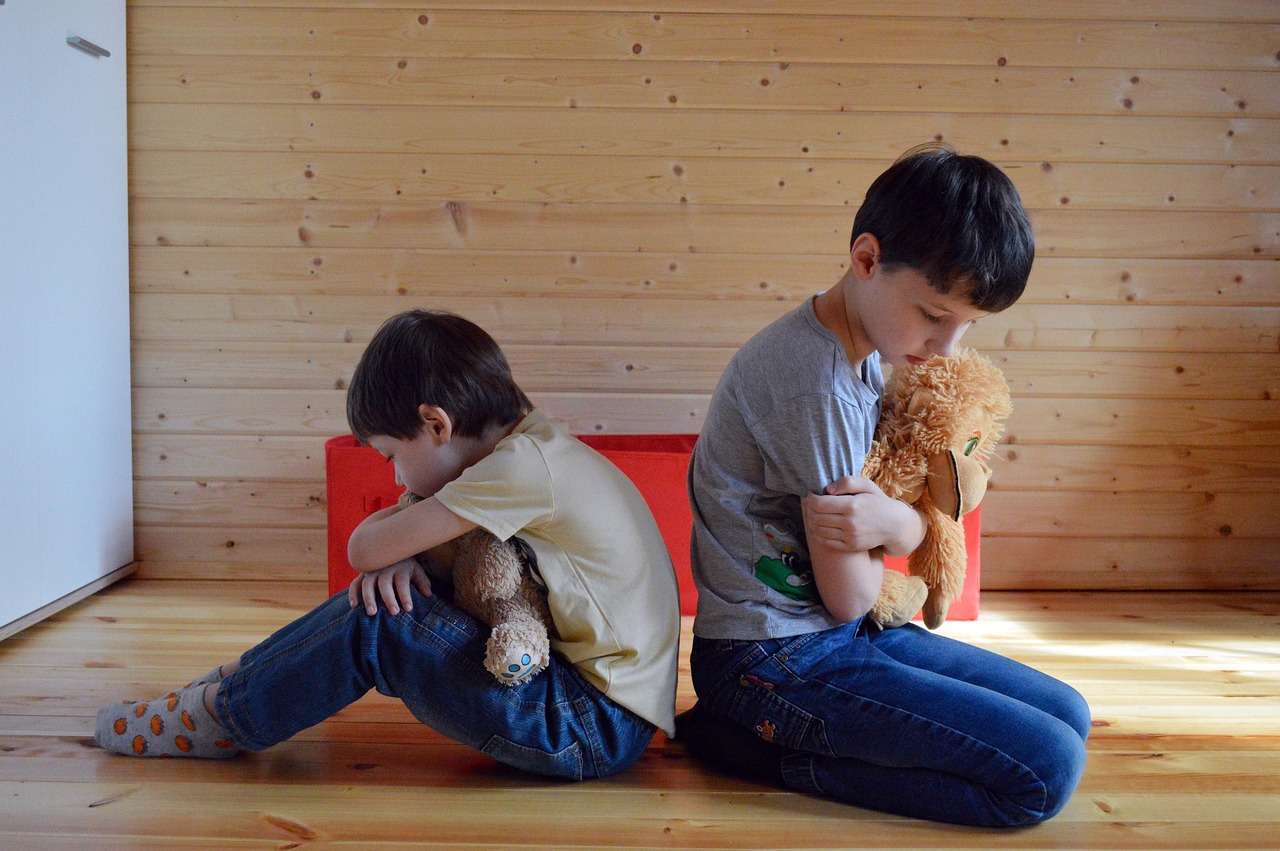
Children may feel jealous or resentful if they believe that their siblings are receiving more attention or preferential treatment from parents. They will try to compete for their parents attention and sometimes, even negative attention, is in the child’s view, better than what they perceive as no attention at all. Sometimes a child who is feeling jealous and insecure will be deliberately disruptive to capture attention and grab it away from another sibling or like the example of the competitive brothers, they’ll push and fight to try to outdo the other.
To minimise this, it’s a good idea to repeatedly remind your children that while they may all be at different ages and stages and therefore require different amounts of attention, you value each of them and you love them all dearly, each in their own way. Explain very clearly that they are not the same, but there are no favourites.
Reaffirm each child of your love. Reaffirm each child of their value and worth as a person. They will be less likely to feel a need to compete if they feel assured that you recognise them and love them for who they are. Encourage them to value and appreciate their siblings in the same way. A new baby is a gift to the family, not someone to compete with, someone who adds to the family, someone who will grow to love the other child(ren), not someone who takes away the parent’s love and attention. Change your insecure child’s perspectives. Tell the child that s/he has been promoted to being the “big” brother or sister.
To avoid a perception of favouritism or a feeling of jealousy, it’s often a good idea to give a younger child your time and attention first, to ‘fill their love tank’ before you engage in a one-on-one activity with another child. When the little one has had a decent dose of your time and attention, her or she will be more likely to be content to play quietly on their own.
Different temperaments and personalities
Many families have that one loud, boisterous or clumsy child that seems totally oblivious to how inconsiderate of others they are – and how annoying they are. The way parents handle these issues and resolve these conflicts can significantly affect sibling relationships. Be careful not to stifle the personality of the loud ‘annoying’ child.
Impatience and annoyance with a younger sibling
In our home, we had one child who was frequently more energetic and noisy than the others, but most of the time, her behaviour was not excessive and not abnormal for a three year old. She still has a more vivacious personality than her siblings. However, when she was a busy toddler, her older siblings often responded unkindly and impatiently and their reactions hurt and upset her.
We had to teach them to be patient and understanding with their little sister. We had to constantly remind her that, while she must be considerate and respectful, that if they responded badly, it was because they chose to be annoyed. Their negative reaction was the problem most of the time, not her. We had to protect her self-esteem from being crushed by immature, impatient older siblings. However, if she was being inconsiderate, then we addressed that issue.
When each party went beyond the boundaries of acceptable behaviour, we had to correct them. We still do sometimes! We also pointed out to our children that they need to value the relationship lessons that they learned from the different siblings in their home. The conflicts highlighted their character weaknesses, which they had to overcome. We taught them to see each person as a blessing, however imperfect they were.
3. Cultivate respect and honour
There are no perfect children and no perfect parents. We all start out as amateurs! Parenting and being consistent in that role is hard, but if you start by teaching each person in your home that they are honoured, have value and deserve respect, and you model that, then each one is more likely to know that this is how they should also be treating their siblings.
“Do to others as you would have them do to you.”
This is an ancient mantra that we used repeatedly in our home and you should too. Jesus said it, but apparently it was a well-known concept dating from centuries before Christ.
Honour teaches children to overcome their natural inclination to be selfish and instead to consider other people. They won’t always get it right and discipline in the form of teaching and instruction will often be necessary, but when you have clearly defined statements about what is expected in your home, with an expectation that each child is competent and capable of living up to these high standards, then you are likely to get more “buy in” from the children.
Sometimes, you have to take time to stop children in the act of bad attitudes or self-centred behaviour and get them to model the correct way to treat a sibling. You have to show them their own selfishness and point out that it does not honour the other person.
“But why should I honour him, when he doesn’t honour me back?”
“Why should I let her sit in the front seat, when I want to?”
“Why should she get her way and not me?”
A child might use these kinds of questions as protests.
You might answer:
“To stop the cycle. To bring positive change. To start healing the relationship with your sibling. To learn to humble yourself and to honour someone else. Because someone has to give in first and I am asking YOU.”
The next time, it could be the other child who must concede first. They may give in reluctantly at first, but as they see that you are consistent in demanding honour and humility from everyone, they will be more inclined to comply and see the benefits of this form of conflict resolution too. It might be useful to understand the subtle differences between respect and honour, as summarised by authors Scott Turansky and Joanne Miller:
- “Respect acknowledges a person’s position; honor attaches worth to that person as an individual.
- Respect teaches manners and proper behaviour in the presence of others; honor teaches and appreciation of that person.
- Respect can become a technique to make a family look good on the outside; honour builds the hidden bonds that provide strength and lasting unity.”
When clashes and incidents of sibling rivalry erupt, you can’t just say “Stop it.” And send the warring parties in different directions. You need to take the time to address the selfishness, and lack of honour that is on display and reiterate these lessons. Expect to do this over and over, even when your children are teens. The more you do it, however, the less you will need to repeat the lesson and the more you will enjoy unity and peace in your home.
And remember as a parent you are not above showing honour to your husband and to your children so that you model the correct attitudes in your home.
4. Heartfelt apologies
A homeschool mom, formerly from Cape Town, Taryn Hayes wrote a beautiful analogy to highlight the essential elements of a properly intended apology. She compared apologies to a toothbrush.
You can use a stick or twig to clean your teeth. This might dislodge anything trapped between your teeth, but it won’t leave you with a clean mouth and fresh breath. That’s like saying, “I’m sorry,” but everything about the apology conveys the insincerity of the words.
You can use a manual toothbrush and brush a little more effectively which is like saying you are sorry and meaning it, but it might still be hard to receive that kind of apology.
If you really want the best effect for your teeth, you need an electric toothbrush and toothpaste.
Taryn explained:
“I like electric toothbrush apologies. Those are the kind where the person who was wronged walks away feeling complete relationship restoration. For me, it involves these important ingredients:
- eye contact
- positive body language
- a truly repentant tone
- an explanation for what one is apologising about and why an apology is necessary
- a request for forgiveness
This was a brief summary of the analogy but it’s worth reading Taryn’s article in full at Apologies are Like Toothbrushes.
We shared that article with our children and now all we need to say is, “That was not a toothbrush apology,” and they all know exactly what is required!
Get your children to role play performing bad apologies and then practice some heartfelt ‘toothbrush’ apologies. Have a laugh at the theatrics!
A sincere apology is also not something that you can force. When such a confession is needed, give the offending sibling some time to think about the matter at hand and allow time for emotions all round to simmer down, before encouraging the child to apologise truly from the heart.
5. Replace behaviour modification with respectful requests
Most parents are familiar with and use a method known by psychologists as behaviour modification, to get their children to obey them.
We attach a reward or a threat of a negative consequence to an instruction.
- You can have ice-cream, if you eat all your vegetables.
- You can’t watch TV until you have tidied your bedroom.
- If you don’t pack away your laundry, then no gaming.
Who knows why we don’t give simple instructions like this:
- Eat all your vegetables.
- Please tidy your room – right away.
- Pack away your laundry, now, please.
Our children have conditioned us. We are so used to them not obeying instantly, that we have to use proverbial sticks or carrots, consequences or rewards, to coax them into obeying. We train them to be slow to obey by tolerating their tardiness. We teach them that behaviour is all that matters, instead of relationships, heart attitudes and good communication skills.
We end up having to make bigger and bigger threats or consequences to get them to take the desired action as we have not reached their hearts and taught them that we value quick compliance as a heart attitude. We speak louder and louder, we nag, we cajole and we explode when they persist in ignoring us!
They recoil inwards and relationships break down.
Behaviour modification might work in the short term, especially if the threat of punishment is harsh enough, but it does not train a child’s heart. You can force behaviour to change with behaviour modification, but it takes much longer and requires more effort to reach a heart.
The following story is useful to explain to children how their heart attitude needs to change. Most likely, every child can relate to this:
A teacher told a little boy to sit down. He refused. The teacher reprimanded him more sternly, “You must sit down!”
The boy sat down, then looked up at the teacher and declared: “I might be sitting down on the outside, but I am standing up on the inside!”
Too many children respond to their parents like that, standing up on the inside.
Behaviour modification may coerce them to comply outwardly, but their hearts remain defiant.
We have to reach their hearts. We need to talk about these feelings and their perceptions with them.
At some point in the past, I (Shirley) adopted a saying that I often repeated to my children:
If you are slow to obey, you disobey.
You have to choose to obey and be quick to obey.
It highlights a heart attitude and that they have a choice. They have agency. You could even use that term and teach your children what it means. Often when faced with instructions, children feel disempowered and forced to obey but you can point out that in a healthy relationship, they do indeed have agency.
Agency in behaviour refers to the ability of an individual to initiate, direct, and control their actions, and the feeling of being in charge of those actions. It’s about an individual’s capacity to influence their own thoughts, feelings, and behaviours, and to make choices that affect their own lives and the world around them.
The intention behind “if you are slow to obey, you disobey” was to show the children that their apathy, laziness or tardiness was a sign of disrespect, if not outright disobedience! And the result of that was likely to be a frustrated parent triggered to erupt into anger. Not a good outcome for anyone. Not a good way to build relationships in the home.
But a child who is quick to obey, is demonstrating a willing heart and showing respect to the parent. It creates pleasing relationships and a happier home. They can choose to obey without having an ‘I am standing up on the inside’ attitude. We often used that expression in discussions about behaviour problems.
I explained to my children that if they couldn’t obey at once, for good reason, then the onus was on them to communicate that to me and then follow through on their word. Don’t just dawdle or not do what was asked.
For example, a mutually respectful conversation might sound like this:
“Lucy, please pack away your school books on the table.”
“Sure, Mom, I can’t do it right away as I am reading a story to Jason, but as soon as I am finished, I’ll get to it.”
Mom might accept this acknowledgement, trusting that Lucy’s intention is to obey and that she will pack away the books a little later or there may be an urgency that she needs to clarify:
“No, please stop the story and quickly do what I asked as someone is arriving in minutes and I need the table cleared. Then you can resume the story.”
When instructions and expectations of both parties are clear and show respect to the other person, then emotions can stay calm.
Without these good communication skills and a sense of mutual respect, you might have a child who says, “Yes, Mom,” but then fails to take action. The parent then becomes angry and exasperated as she has been ignored, left to do the task herself or left to invite the visitor into a messy room.
Often children become defiant, when they feel that they have no choices and that an authoritarian parent is dictating their lives. Their hearts become bruised and then they harden their hearts to protect themselves from more bruising.
As parents, we need to reach out and show the children that they do have choices. They do have agency. They can choose to obey joyfully or they can disobey and harm the relationship. It may be obvious to us, but sometimes we need to point out to children that a relationship works two ways and that they have a significant part to play too.
As you consistently speak to your children, speak to your children, and yes, speak to your children to train and inspire them to change their hearts and their attitudes, the more you will observe changes in relationships, not just a change in behaviour. You will tackle the root of selfishness, disobedience and immaturity and bring about lifelong changes in your family’s thinking, their speaking and their actions. Their relationships will improve and deepen as they grow in character and grow in maturity.
Be persistent. Collect your unique repertoire of powerful stories, analogies and sayings, raise your expectations and develop your family culture and values. You’re building a legacy.
Parent books
Change is a process and when it involves parents and children, it is usually slow and ongoing. The books below were immensely useful to our families and helped us to focus on training our children more effectively than at first. They provide a useful framework with anecdotes and examples from other families to encourage you to persist at getting your family on the right track.
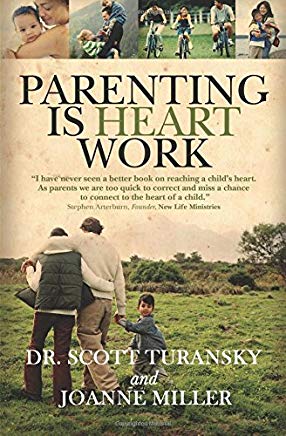
Parenting is Heart Work, Dr Scott Turansky and Joanne Miller
This book will revolutionise your parenting strategies and show you how to touch your child’s heart to teach and train him. Instead of merely punishing your children, you will discover how to build a strong relationship with each child in your family. A great parenting tool.
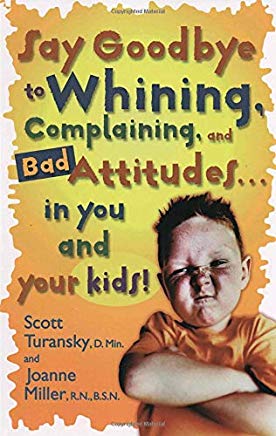
Say Goodbye to Whining, Complaining and Bad Attitudes in You and Your Kids!, Dr Scott Turansky and Joanne Miller
This book will help you to establish honour and respect as the basis for all family relationships in your home. It gives practical tips and suggestions to help you achieve this goal and change the way everyone behaviours. It will help you to identify the issues of the heart that trigger inappropriate responses and behaviour, for every age group!
More Parenting Advice
More Parent Books
5 Tips for the Stressed Homeschool Mom
Homeschooling – Blessing or Burden?
Entitlement and Teaching Thankfulness
Homeschooling – Raising Men and Women of Character