
Choosing a homeschool curriculum doesn’t have to be overwhelming, permanent or expensive. Learn to avoid “school-at-home” traps with top tips from veteran moms.
If you are new to homeschooling, choosing a curriculum can seem like the most important decision you have to make. There are so many different programmes, publishers, approaches and opinions that it is very easy to feel that you need to find the right curriculum before you can even begin.
Actually, choosing a curriculum should be one of the last things you do when you start homeschooling.
Feeling overwhelmed by all the choices?
Watch Our Video: How to Choose a Homeschool Curriculum
There are dozens of homeschooling programs to choose from…how are you meant to decide? Listen to the tips from two veteran homeschool mothers with over 20 years of homeschooling experience each. In this short video clip, Shirley and Wendy chat about how to make the best decision, deal with the anxiety about making a mistake and share some personal anecdotes about what really matters. Watch the video and then read on.
Choosing a Homeschool Curriculum Shouldn’t Be Hard
There is a lot to learn when you first start homeschooling, and choosing a curriculum can certainly feel like one of the biggest hurdles but once you understand that there isn’t one perfect curriculum and that you are free to change your mind, much of that pressure disappears.
Your first curriculum choice is simply that: your first choice.
It is not a commitment to the next twelve years.
It is not a test of whether you are going to be a successful homeschooler.
It is simply a place to begin.
Start by Learning about Homeschooling
Before you start comparing programmes or filling your shopping cart with programmes, take some time to learn about homeschooling itself.
Sign up for our free 7-part email series Tips for Starting Homeschooling, find out about the practicalities of home education, think about what you hope to achieve through homeschooling and, most importantly, begin to think about how your own children learn best.
- Do you want your children spending most of their day working independently through textbooks and worksheets, or are you hoping for a more relaxed family learning environment?
- Do you want to follow a particular educational philosophy, or would you prefer to choose different resources for different subjects?
- How important are books and stories in your homeschool?
- How much time do you want to spend outdoors or doing practical activities?
These questions will influence your curriculum choices far more than somebody else’s list of the “best homeschool curricula”.
Once you have done that, choosing resources becomes much less daunting because you have some idea of what you are actually looking for and also what you want to avoid!
As we said, you are not choosing the curriculum for the next twelve years of your child’s education. You can review your choices at the end of the year (or sooner), keep what is working, replace what isn’t and try something completely different if your family’s needs have changed. This is normal!
After almost 30 years in home education, this is something that we, Wendy and Shirley, have seen many times. Most parents don’t really know exactly what will work best. They discover it gradually, by trying things, observing their children and making adjustments along the way. In different seasons and at different ages and stages, we tweak and change the resources we use.
So don’t make your curriculum choice into a decision that feels enormous and irreversible. It isn’t.
There is No Best Homeschool Curriculum
One of the first things most new homeschoolers discover is just how many curriculum choices there are. This can be both exciting and overwhelming.
There is a temptation to look for the best homeschool curriculum, as though somebody has already worked out which programme is objectively the best and you simply need to discover what it is but that is not really how homeschooling works.
In our article Choosing the Best Curriculum we compare choosing a curriculum to choosing a family car. There isn’t one car that is best for every family because families have different needs, different budgets, different numbers of children and different ideas about what makes a car suitable. The same is true of curriculum.
A programme that one homeschooling mother describes as absolutely wonderful may be exactly what another family needs to get through a difficult season, while another family finds it frustrating and unsuitable. Neither parent is necessarily wrong. Their families are simply different.
That is why we think the article, Why “What’s the Best Curriculum?” is the Wrong Question, is an important one for new homeschoolers. Instead of asking which curriculum is the best, it is much more useful to ask how your children learn best and what kind of resources will help them learn that way.
Don’t Bring the School Home
There is another trap that is particularly easy for new homeschoolers to fall into because school is what most of us know.
When you have spent your whole childhood in a classroom, it is natural to assume that successful homeschooling means recreating the classroom at home. You buy all the textbooks for a specific grade, work according to a timetable for every subject, sit at a desk for several hours a day, complete worksheets, mark work and try to make sure that your children are “keeping up”.
It seems sensible to follow the System, but after nearly three decades of homeschooling, what we have observed is that trying to replicate the school system at home is often the most stressful way to educate your children.
No one enjoys it!
We have heard the same story from parents again and again. They begin homeschooling determined to “do it properly”, buy a complete (online) curriculum package and try to work through every lesson exactly as instructed. Before long, they are spending their days trying to keep children on task, trying to get through the prescribed work and wondering why homeschooling has become such a slog.
The children aren’t enjoying it and neither is the parent. What they hoped would give them the tools and confidence to homeschool, ends up actually undermining that goal and makes them feel like they are failing!
At homeschool events around the country, we have had so many tearful mothers share this experience with us that we wrote about giving yourself permission to relax in our article Relaxed Homeschooling.
That doesn’t mean that structured curricula are necessarily bad. There are families who genuinely prefer them and some children thrive with a great deal of structure. If that is your family, there is absolutely nothing wrong with choosing a more structured approach. However, experience shows that most families blossom when they build flexibility into a lifestyle of learning at home, rather than trying to do school-at-home.
The important thing is to realise that you have choices.
You don’t have to recreate school simply because you are homeschooling.
There are Other Ways to Homeschool
One of the great freedoms of homeschooling is that you can step outside the conventional school model and discover what works for your own family.
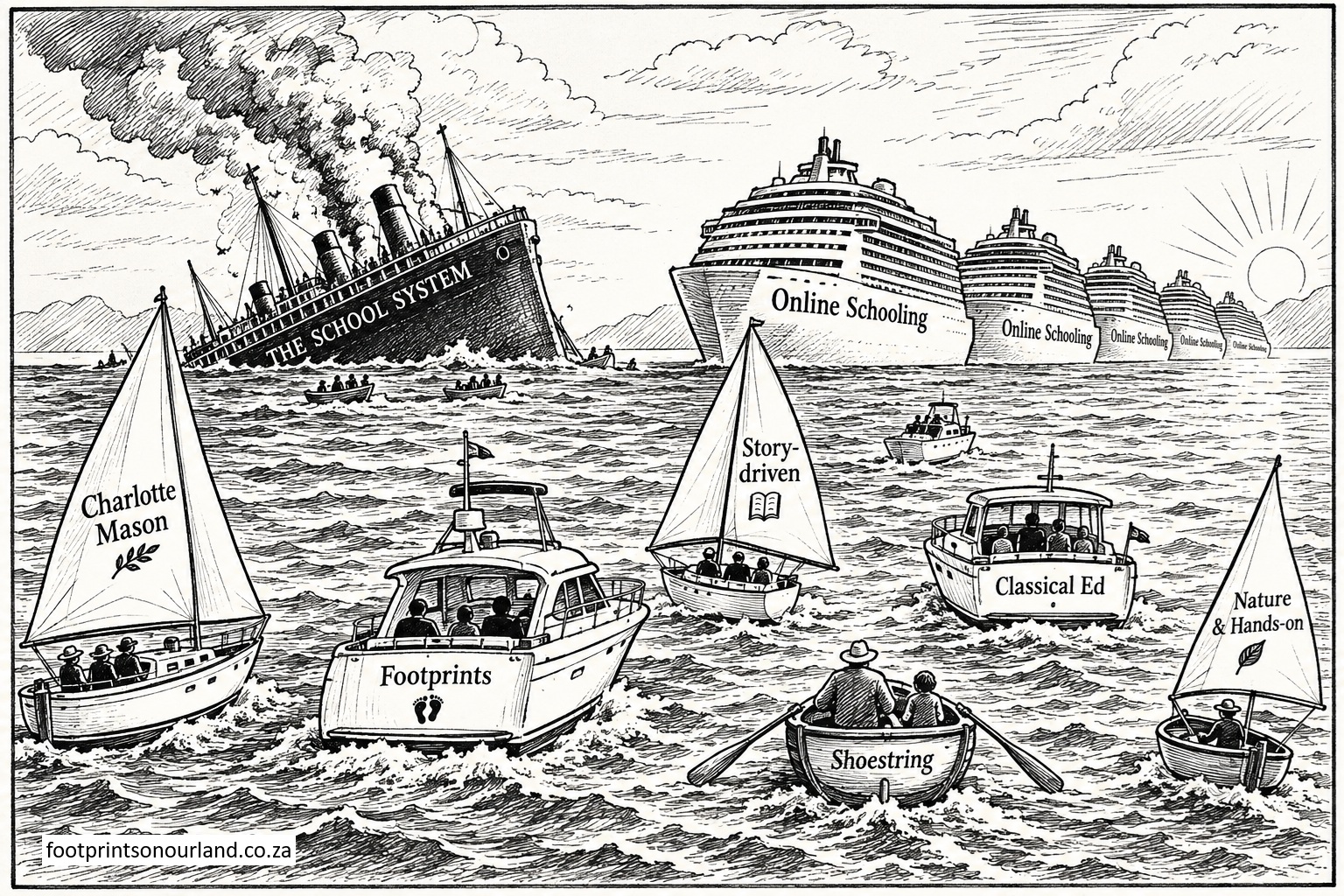
As this cartoon image shows, there are now enormous online schooling platforms that look very much like schools, complete with lessons, timetables, screens, teachers and assessments. They can certainly be a useful option for some families. Yet online schooling is not the only alternative to traditional school.
Look at the little privately-owned boats in the foreground. They represent the many different ways to educate a child at home.
- Charlotte Mason-style
- Classical education
- Story-driven learning
- Nature-based education
- A simple, inexpensive homeschool built around good books, real life and a mother’s time…
And then there is Footprints, where we have chosen to weave together the best of all these approaches using living books, stories, history, geography, nature, art, music, writing and narration into an eclectic South African, family-centred education.
The point isn’t that one boat is right for every family.
The point is that you get to choose the boat.
You don’t have to recreate school at home simply because school is the model you know.
Before you ask, “Which curriculum should I buy?”, perhaps the better question is: “What do I want my child’s education to look like?”
Then choose a curriculum that helps you get there.
Homeschooling gives you something the school system cannot easily give you: the freedom to decide what education is actually for.
Don’t Just Leave School. Leave School Behind.
You can’t homeschool differently with a school mindset. You have to mentally sail away and leave that massive institution behind.
Over the years we have heard from many parents who started out trying to reproduce school at home and eventually realised that they didn’t have to. They began amending their expectations about what learning was supposed to look like and discovered that their children could enjoy a rich and rigorous learning experience through “living books” and stories, conversations, nature study, practical activities, documentaries, games, projects and simply following their interests.
For many of these families, that change was transformative.
They tell us that their children became more interested in learning and that the parents themselves began to enjoy homeschooling much more. They discovered that there was a great deal of freedom in allowing learning to happen naturally rather than trying to squeeze every subject into a school timetable.
“Your curriculum has changed our lives and enabled us to have this lifestyle and know my kids are learning loads.” ~ Elanza le Roux
This is one of the reasons that we have always encouraged an eclectic approach to homeschooling.
The meaning of eclectic is composed of elements selected from a variety of sources. For homeschooling it means that you choose what works for your family. You don’t have to commit yourself to one educational philosophy or one curriculum company and use its products for every subject. You might use a particular programme for Maths, choose another resource for languages, use Footprints living books for history and science, spend a great deal of time outdoors and add practical projects whenever your children become interested in something.
You can pick and mix…and you can change your mind.
Our article School-at-Home vs Eclectic Homeschooling highlights the many differences and benefits of an eclectic, parent-led approach.
Alongside the Footprints programmes we have created for Social Studies and Nature Science, we have also spent many years finding resources for other subjects that are tried-and-tested and loved by homeschoolers. We have lists and recommendations for a range of subjects, so that you can combine Footprints with other resources to create an education that suits your particular family.
We don’t expect Footprints to be the answer to every subject for every family. Our aim is to provide excellent resources in the areas where we have particular experience and expertise, while giving you the freedom to choose everything else according to your own children’s needs.
Where Footprints Fits in
Footprints grew out of our own experience of homeschooling our children in South Africa. After almost 30 years of home education, we know that families need flexibility, particularly when they are homeschooling several children at different ages.
Our programmes are therefore not designed to turn your home into a miniature school. They are designed to give families rich material to explore together, particularly through a combination of stories and non-fiction covering social studies, history, geography, nature and the heritage of South Africa.
This is also why Footprints works particularly well for families who want a Charlotte Mason-inspired or eclectic approach to homeschooling. Rather than asking you to follow a rigid daily timetable, our programmes give you material that can become part of the rich learning environment you are creating for your children.
You can use Footprints as a central part of your homeschool, combine it with other programmes or dip in and out of different resources as your family’s needs change.

What about CAPS and Curriculum Approval?
South African parents sometimes worry that they have to use a particular curriculum in order to homeschool legally, or that the curriculum they choose has to be officially approved.
This can make the process of choosing curriculum seem much more complicated than it actually is.
We have separate articles explaining Curriculum Compliance and Curriculum Approval, but the short version is that South African homeschooling families are free to choose the curriculum and resources that suit their educational approach and their children.
You do not have to find a so-called government-approved homeschool curriculum before you can begin. (There aren’t any. They don’t even have criteria by which to evaluate curricula!)
You also don’t have to follow or reproduce the school’s curriculum in your home simply because that is what you remember from your own education.
If you are considering Footprints specifically, you can also read Footprints vs CAPS: What’s the Difference for South African Homeschoolers? to understand how our programmes compare with the South African curriculum requirements and exceed them!
Give Yourself Permission to Change Your Curriculum
Perhaps the most useful advice we can give a new homeschooling parent is to give yourself permission to change your mind.
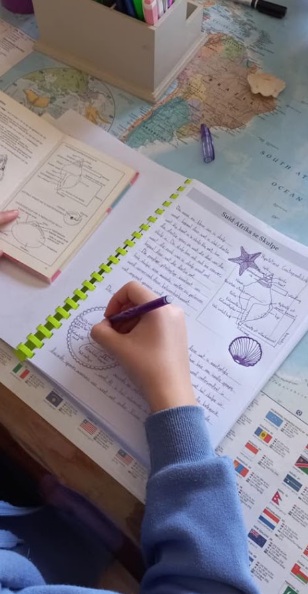
The curriculum that looks perfect before you start homeschooling may turn out not to suit your child at all. A programme you thought you would dislike may become a family favourite. You may discover that your child needs far more hands-on learning than you expected, or that they can handle much more independent work than you initially thought.
You will learn these things by homeschooling.
That is why we don’t think you should spend a fortune on a full-service curriculum enrolment before you have had a chance to discover how your children respond to different kinds of learning.
Start with what seems sensible. Use it for a while. Watch what happens. If it is working, carry on. If it isn’t, ask yourself why and make some changes.
There is no prize for sticking with a curriculum that everybody in the family dislikes simply because you bought it at the beginning of the year and there is certainly no shame in saying, “This isn’t working for us. Let’s try something else.”
Our article Unlocked Learning at Home explores a variety of ways to give children a customised education that sets them apart from “the crowd” and sets them up for success in life.
Review Your Homeschool Curriculum Every Year
Rather than thinking of curriculum choice as a once-and-for-all decision, we suggest that you make it part of your annual homeschooling review.
Towards the end of each year, look back at what you have been doing and ask yourself some simple questions.
- Is my child learning?
- Are they enjoying learning?
- Is this curriculum helping us to achieve what we hoped it would?
- Does it suit the way my child learns?
- Does it fit comfortably into our family life, or are we spending far too much time trying to get through it?
And don’t forget to ask yourself how you are doing. The curriculum must work for you as well as for your children!
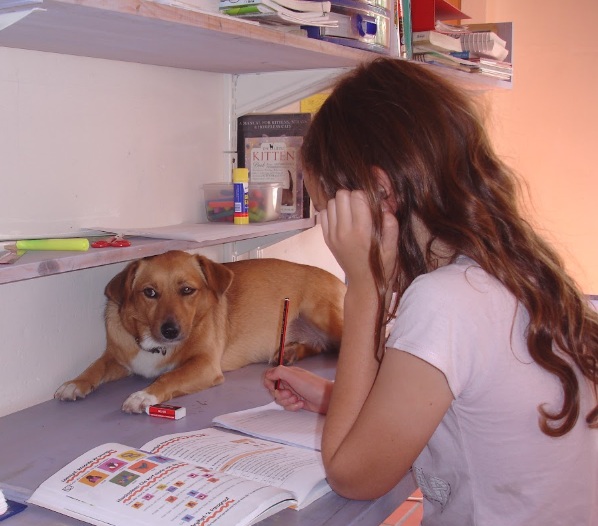
If you are constantly stressed because you are trying to keep up with an unrealistic programme, that is worth paying attention to. Homeschooling is a long journey and the resources you choose should support your family rather than making every day feel like a battle.
You may decide that everything you are using is working beautifully and you don’t want to change a thing or you may decide that next year is the time to try something new. Both are good decisions.
Your Homeschooling Will Change
One of the lovely things about homeschooling is that you don’t have to have it all figured out at the beginning.
Your children will grow, their interests will change and you will become more experienced and more confident. Your family circumstances might also change. Something that suited you perfectly when your children were young may no longer be the best choice when they are teenagers.
Your homeschooling can change as your family matures.
You may start with a fairly structured approach because it gives you confidence, then gradually discover the freedom of a more eclectic style or you may start very relaxed and eventually decide that you need more structure. You may find that one child loves independent work while another learns best when you read aloud together.
There is no contradiction in any of this.
You are not failing at homeschooling when you change your approach. You are learning how to homeschool your particular children.
After more than 20 years of supporting homeschoolers, we would much rather see a family happily changing direction than struggling for years to make a curriculum work simply because they once decided it was “the right one”.
So, How do You Choose a Homeschool Curriculum?
If you are feeling overwhelmed by all the choices, take a step back.
You don’t need to find the perfect curriculum. You don’t need to copy what another family is doing. You don’t need to buy an entire year’s worth of resources before your children can start learning.
As we said at the start, first learn about homeschooling. Think about your family and your children. Consider how they learn best and what you want your days to look like. Then choose a few resources that seem likely to fit.
Try them. They all work to some extent, but which ones do you like?
Change the ones that you don’t like…and then next year, you get to make the decision again.
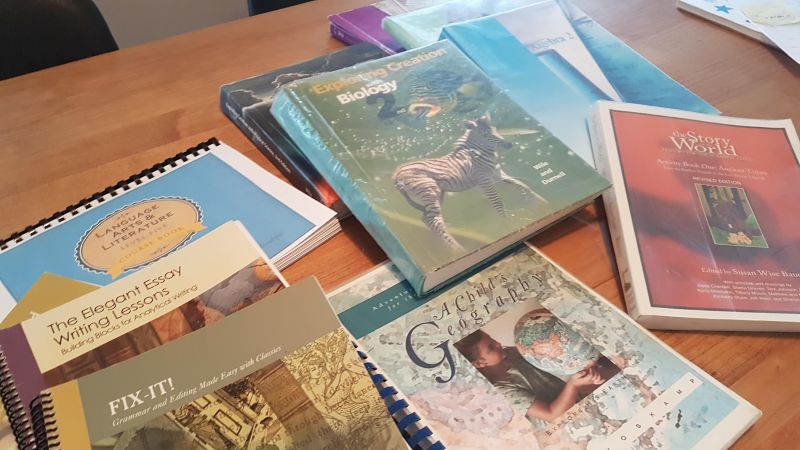
That is one of the great advantages of homeschooling: you are not locked into somebody else’s system. You have the freedom to build an education around your children and your family and to keep refining it as you go.
More Help With Choosing a Homeschool Curriculum
If you are still wondering where to start, these articles may help:
Starting Homeschooling
If you are new to homeschooling, start here before you start shopping for curriculum.
Choosing the Best Curriculum
Choosing a curriculum is a lot like choosing a family car. There is no one-size-fits-all answer.
Why “What’s the Best Curriculum?” is the Wrong Question
The better question is not which curriculum is best, but how your child learns best.
Curriculum Compliance
What does South African homeschooling law actually require?
Curriculum Approval
Does your homeschool curriculum need to be officially approved?
Footprints vs CAPS
See how Footprints meets and far exceeds the South African CAPS curriculum requirements.
Other Homeschool Curriculum Resources
Explore our tried-and-tested recommendations for subjects beyond the Footprints programmes.
Why Choose Footprints South African Homeschool Curriculum?
Footprints was established in 2002 specifically for South African homeschooling families who want an education that is rich in literature, connected to real life, rooted in South African history and heritage, designed around the way children naturally learn. It also builds a strong academic foundation for higher learning by combining academic rigour with a gentle, flexible approach so that you don’t experience the stress of trying to replicate school at home.
Our article Why Choose Footprints? will help you decide if this is the right choice for this season of your family’s homeschool journey. You are welcome to Contact Us if you have questions or need advice for your specific family scenario.
English Packages
- Barefoot Days (ages 4-8)
- Little Footprints (ages 4-8)
- Footprints The Early Years (ages 8-14)
- Footprints The Last Century (ages 10-16)
- Nature Quest (ages 8-16)
Afrikaans Packages
- Kaalvoetpret (4-8 jaar)
- Voetspore 1 – Die Vroeë Jare (8-14 jaar)
- Voetspore 2 – Die Laaste Eeu (10-16 jaar)
- Natuurskattejag 1 (8-16 jaar)
- Natuurskattejag 2 (10-16 jaar)
Suggested Reading
You Can Teach Your Child Successfully – Ruth Beechick
The Three R’s – Ruth Beechick
Home Learning Year by Year – Rebecca Rupp
Websites
Coming up in Part 6 of this E-course: Children in your home 24/7…Organisation 101!
Top