

When the Mokoena family began homeschooling their 9-year-old daughter Zinzi, they did what most new homeschoolers in South Africa do—they turned to CAPS. It felt familiar and it felt safe because its the official school curriculum.
For the first few weeks, it seemed to work. Zinzi completed her worksheets. She ticked off her outcomes but soon, something began to change.
“She stopped asking questions,” her mother Thuli remembers. “Zinzi had always been curious…she used to ask things like, ‘Why did people live in caves?’ or ‘How did they cook before microwaves?’ but after a few months on CAPS, she just did the minimum and wanted to be done.”
Thuli felt exhausted too. She was constantly printing assessments, cross-referencing curriculum trackers and trying to keep up with the overwhelming volume of content. “It felt like school had invaded our home. We were stuck behind books that felt lifeless.”
They weren’t alone.
The Pressure Cooker of CAPS at Home
The Du Preez family in Pretoria had a similar experience. After pulling their son Stefan out of school due to bullying, they committed to homeschooling and signed up for a CAPS-aligned online programme.
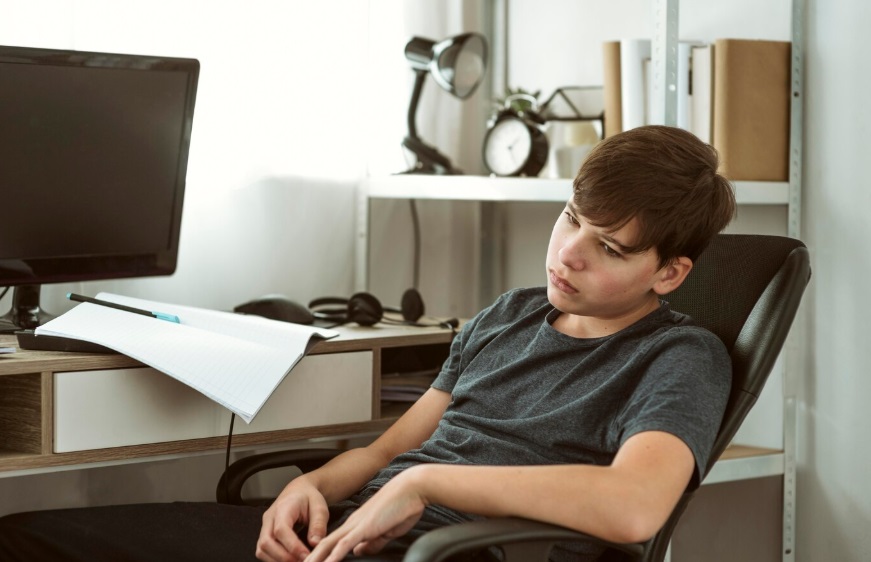
“Every day felt like a rush to keep up,” Stefan’s father, Johan, shared. “We were constantly being told he was behind—even though he was learning so much through everyday life. But none of that counted because it wasn’t in the workbook.”
The endless worksheets, rigid schedules and stress about falling behind made Stefan anxious. “He started saying he hated learning. That’s when we knew something had to change.”
Enter Footprints: A Whole New Way to Learn
Both families began looking for something different and discovered Footprints.
“It was like a breath of fresh air,” Thuli says. “Instead of textbooks, we started reading beautifully written stories about South African explorers, kids living through the gold rush and ordinary people trying to navigate the changes of our country’s early history. Zinzi was captivated.”
With Footprints’ story-based approach, learning came alive. History wasn’t just dates, it was people. Geography wasn’t just maps, it was adventures. Language arts wasn’t isolated grammar drills, it was the natural outcomes of reading, writing and responding to real literature.
And instead of rushing, Zinzi could slow down and go deep, asking the kinds of questions that led to rabbit trails and rich conversations about our origins, historical conflicts and other aspects of South Africa.
“She wanted to plant a garden after reading about the Company’s Garden and the Boom family. She started a diary like the character in one of her books. We weren’t just ticking boxes anymore, we were building something real.”
From Rote to Real-Life
For the Du Preez family, the shift was just as profound.
“We read a story about a child travelling by ox-wagon and Stefan begged to build a model of it. We turned it into a whole project, measuring, sketching, building … and he wrote a report about transport changes over time. It covered technology, history, design, writing… all in one go.”
What struck Johan the most wasn’t just the academic growth but Stefan’s renewed confidence and joy.
“Under CAPS, he was falling apart. With Footprints, his interests came alive.”
The Difference? It’s Not Just the Curriculum—It’s the Philosophy
CAPS wasn’t built for homes. It was made for classrooms. It assumes one teacher, 30 learners, rigid timelines and national testing. Trying to force that into a family setting often leads to frustration, burnout and disconnection.
Footprints, on the other hand, was created by homeschooling parents, for homeschooling families. It respects the unique rhythms of home life, including its many disruptions and turns everyday moments into powerful learning opportunities.
- It replaces frantic schedules with meaningful routines.
- It swaps worksheets for living books.
- It puts relationships and curiosity at the centre of education.
And Yes, it Still Delivers Academically
One of the biggest fears parents have when they leave CAPS is: Will my child still be “on track”?
Children who use Footprints go on to excel in high school and beyond. Whether they pursue GED, Cambridge, American High School Diploma or other international options, they’re equipped with the thinking skills, language fluency, historical awareness and love of learning that school systems often fail to nurture.
“They know how to learn,” says Johan. “And that’s something no test can fully measure, but its the foundation of every real success story.”
Our article The Researched Advantage of Charlotte Mason Homeschooling in South Africa Today highlights the modern neuroscience and educational research that now confirms that the Charlotte Mason approach that Footprints includes, which includes living books, nature study, short lessons and habit training creates more successful learning, calmer homes and children who truly love to learn.
From Compliance to Confidence
Homeschooling with CAPS often feels like trying to replicate school at home, only without the resources or energy of a full school system. Our article, Footprints vs. CAPS: What’s the Difference for South African Homeschoolers explains in greater detail the difference in approaches of a system designed for educating the masses in the school system compared to personalised home education to suit each individual child.
Homeschooling with Footprints feels like rediscovering the reason you chose to educate at home in the first place: connection, freedom, joy, depth.
As Johan puts it, “We didn’t know learning could feel like this.”
Want to experience the difference for yourself?
Explore Footprints’ range of story-rich, multi-subject programmes designed specifically for South African homeschoolers. Whether you’re just starting out or looking to break free from the CAPS grind, there’s a better way and it starts with a good story.