
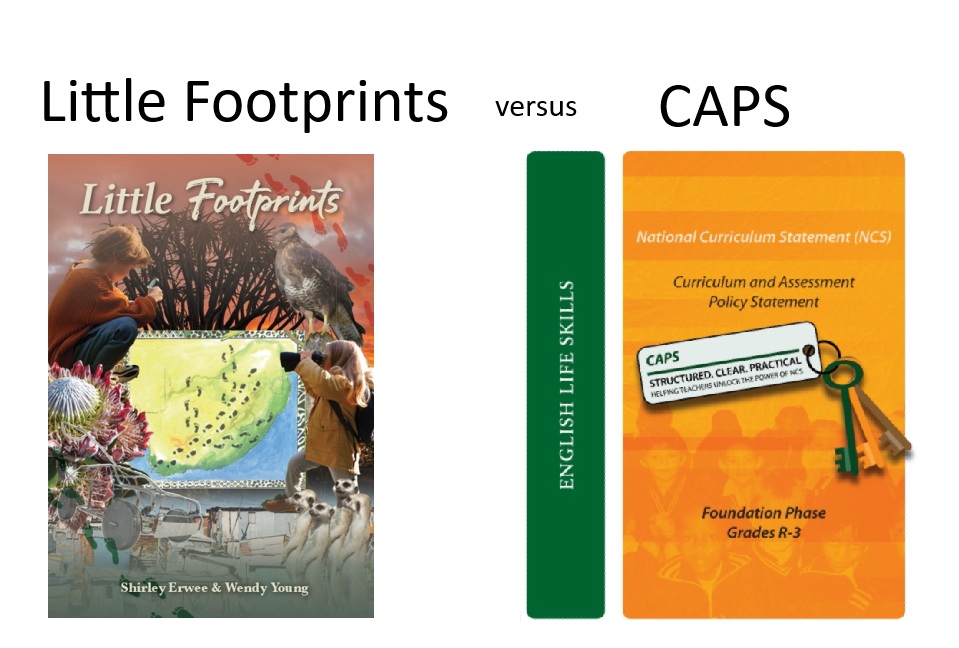
Many South African parents who homeschool wonder how a story-based curriculum like Little Footprints – South Africa in Stories compares to the Department of Basic Education’s CAPS (Curriculum and Assessment Policy Statement). Little Footprints was created in 2005, long before the national Curriculum Policy and Assessment Statement was published by the Department of Basic Education in 2011, but by far it surpasses the official recommendations for Life Skills in the Foundation Phase (Grades R-3)!
CAPS is not Compulsory
It is important to note that the BELA Guidelines published by the Department of Education confirm that:
CAPS is not compulsory. The curriculum requirement is that the learner must “predominantly cover content and skills at least comparable” to the national curriculum. The DBE interprets this to mean that learners should cover a comparable scope of content and variety of skills, without needing to follow CAPS specifically.
There is no pre-approved list of curricula. Parents are free to choose educational programmes that suit their child’s needs and interests. The CAPS document even states: “Teachers are encouraged to adapt the topics so that they are suitable for their school contexts. Teachers are also encouraged to choose their own topics should they judge these to be more appropriate.” [our emphasis in bold]
Our article, Footprints vs. CAPS: What’s the Difference for South African Homeschoolers? explains the difference between this framework drafted for schools and how you can meet and exceed the requirements without burdening your family in an eclectic approach, crafted to meet the needs of your specific children!
So, even though you are not obligated to follow the CAPS requirements, it is reassuring to see that Little Footprints meets and exceeds the requirements through rich, story-centred, hands-on experiences that nurture the whole child — mind, body and character, without adding any extra rigour or stress to your homeschooling days. It’s a relaxed, flexible learning programme, loved by South African homeschooling families for over 20 years!
CAPS Overview
In the Curriculum and Assessment Policy Statement (CAPS) the subject Life Skills in Foundation Phase (Grades R-3) has been organised into the following four study areas:
- Beginning Knowledge
- Personal and Social Well-being
- Creative Arts
- Physical Education
These themes are divided into four terms and focus mainly on general knowledge about oneself, family, community, seasons, animals and basic life skills.
Here’s what the national curriculum expects children to learn in each term for Beginning Knowledge and Personal and Social Well-being. These same themes are repeated for each of the four foundation phase years:
- Term 1: Me, my school, my body, days of the week, summer, shapes and colours and festivals
- Term 2: My home, safety, my family, weather, the senses and festivals
- Term 3: Winter, transport, jobs, water, fruit and vegetables, farming, a healthy environment and festivals
- Term 4: Spring, birds, reptiles, dinosaurs, wild animals, sport and festivals
Creative Arts topics include:
- Movement, dance and drama
- Drawing, painting and model-making
- Looking at and talking about pictures and art
The CAPS topics for Physical Education include:
- Free play indoors and outdoors – encouraging movement, creativity and social interaction
- Gross motor activities – climbing, balancing, swinging, ball play and using wheel toys to build coordination and strength
- Fine motor activities – cutting, tearing, pasting, threading, weaving, puzzles and using tools like tongs or tweezers to develop control and dexterity
- Sensory play – exploring textures and materials through sand, water and mud play
- Creative expression – art, music and writing areas supporting coordination, rhythm and early literacy
- Construction and block play – developing spatial awareness, problem-solving and teamwork
- Fantasy and role play – encouraging imagination, cooperation and emotional growth
- Discovery and nature-based activities – gardening, caring for animals and exploring interest tables to connect physical activity with curiosity and observation
In total, CAPS outlines around 35–40 broad themes for the year across these categories. In contrast with CAPS, depending on how you group the cross-curricular activities, Little Footprints encompasses roughly 140 broad themes or integrated units of learning, each connected through stories, crafts, nature study and music.
How Little Footprints Compares to CAPS
Little Footprints – South Africa in Stories goes far beyond a list of topics. It uses stories, art, music, science experiments, Bible lessons and crafts to weave these concepts naturally into meaningful, localised learning experiences.
When we compare the Little Footprints topics with the CAPS themes, it’s clear that the programme covers nearly all of the national topics—often in more depth and with stronger cultural and environmental connections.
Let’s look at the overlap:
1) Beginning Knowledge and 2) Personal and Social Well-being
| CAPS Theme | Coverage in Little Footprints |
| Me / My Body / My Family / My Home / My School | Covered through social studies, Bible lessons on family life and crafts about community, houses and routines (e.g. Families, Different Homes, Family Structures, Helping in the Home). |
| Days of the Week / Months / Seasons / Weather | Fully covered (e.g. Maths Skills – Concept of a Week, Seasons, Weather in South Africa, Rainbows, Spring / Summer / Winter themes). |
| Safety and Health | Covered through Life Skills – Safety, Traffic Lights, First Aid for Burns, Healthy Environment, Planning a Menu and Hygiene and Stewardship lessons. |
| Farming / Food / Fruit and Vegetables / Water | Richly covered with multiple lessons: Vegetable Gardening, Farming, Water Table, Life Cycle of a Frog, Peanuts, Citrus, Corn, Water Scarcity and Dams for Water Supply. |
| Transport / Jobs People Do | Covered in Transport, Rail Transport, Jobs and Entrepreneurship Activities, Public Transport and Helping in the Home. |
| Birds / Reptiles / Dinosaurs / Wild Animals | Extensively covered through Nature Study on Birds of Prey, Reptiles, Leopards, Wild Dogs, Penguins, Whales, Bushveld Animals and more. |
| Festivals and Special Days | Covered through Easter, Christmas in Africa, Day of Reconciliation, Birthdays and Father’s Day units, as well as cultural celebrations like Zulu Traditions and Xhosa Village Life. |
| Senses (Sound, Sight, Taste, Smell, Touch) | Covered in Science – Sound, Transparency, Surface Tension, Smell and Taste Activities and Sensory Play. |
| Sport / Movement / Dance / Drama | Addressed in Creative Games and Skills, Music Appreciation, Rhythm Activities, Poetry Recitation and Drama through Storytelling. |
| Shapes and Colours / Art and Design | Strong emphasis through Art Appreciation, Colour Theory, Shades and Tints, Patterns, Perspective, Still Life, Line Drawings, Mixed Media and 3D Modelling Crafts. |
By reviewing the hundreds of Little Footprints lesson topics, we can confidently say that it covers more than 90% of the CAPS content areas, while also including a great deal of enrichment content not found in CAPS, such as:
- South African heritage studies: lessons on Nelson Mandela, Archbishop Tutu, Zulu and Xhosa cultures and the history of cities and regions.
- Entrepreneurial and life skills: units on budgeting, earning money, helping in the home and innovative thinking.
- Environmental awareness: nature studies on conservation areas, recycling and sustainable living.
- Bible study and character development: lessons on diligence, honesty, generosity, stewardship and gratitude.
- Cultural literacy: exposure to local music, poetry and visual art from African artists and composers.
3) Creative Arts
Little Footprints – South Africa in Stories fully meets and exceeds the CAPS requirements for Creative Arts by integrating visual art, music, drama, and movement across all areas of learning. While CAPS introduces basic skills in drawing, singing, acting and creative games, Little Footprints offers a richer, story-driven experience where children paint, sing, dramatise and create as part of an interconnected, sensory learning journey. The programme introduces South African art, music and cultural heritage, nurturing creativity, coordination, imagination and appreciation for beauty in a deeply meaningful way that goes well beyond the minimum CAPS expectations.
4) Physical Education
When it comes to Physical Education, we were delighted to find that the CAPS document itself recognises what many homeschoolers already know — that young children learn best when they are free to move and explore. It clearly states that children “should not be stuck in chairs behind desks all morning. They rather need comfortable spaces with blankets and cushions and workspaces with chairs and tables in which they can play, work and move around freely.” [our emphasis in bold]
This confirms that there’s no need to turn your home into a classroom.
According to CAPS, “generally the Foundation Phase timetable consists of routine activities, free play activities indoors and outdoors and structured activities. Routine and free play activities have been built into the Life Skills CAPS document because they usually involve learners in physical education or health education.” [our emphasis in bold]
So, when you go about your daily routines — helping your children to dress, make their beds, tidy up, pack away toys, practise hygiene or learn good manners and respect — you are already covering the requirements of the national curriculum. It all counts as learning. Every one of these activities contributes to your child’s education and well-being. Avoid thinking that only formal lessons or workbook exercises qualify as ‘real’ education. Outings and expeditions are also a vital part of the Little Footprints learning experience!
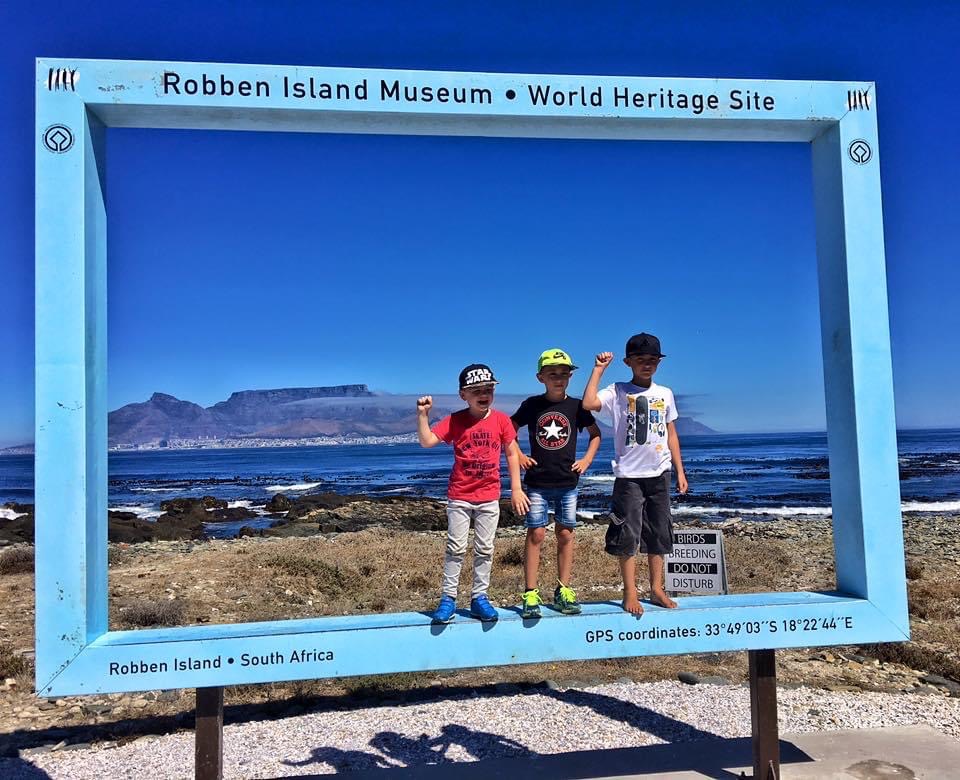
Your conversations matter too — the times when you warn of danger, explain something in nature, or discuss what you see in traffic or in public are all valuable teaching moments. This is what holistic education looks like: learning that flows naturally from daily life. Any curriculum, without your presence and guidance, would fall short. The moment-by-moment training, encouragement and correction that you provide are irreplaceable. A classroom teacher can never reproduce the deep, enduring relationship that forms the foundation of your child’s learning at home.
As Meghan Cox Gurdon writes in The Enchanted Hour, “There is no genius in Silicon Valley who has yet devised a machine half as effective for teaching and nurturing the young mind as a flawed, fallible, physically present human being.”
What wonderful reassurance this is! With all your imperfections, doubts and learning curves, you are your child’s greatest educational asset. Your voice, your presence, your time and your care shape your child’s development in ways that no app, online programme or artificial tool could ever replace.
Finally, never underestimate the importance of free play. As the saying goes, “Play is the work of childhood.” Research confirms that free play is vital for healthy brain development. The CAPS document itself notes that the physical skills children build and practise through free play directly support learning in both Physical Education and Creative Arts.
Here’s how Little Footprints and CAPS compare for Physical Education
| CAPS Physical Education | Comparable Experiences in Little Footprints |
| Free play indoors and outdoors | Daily nature walks, outdoor games, imaginative play after stories |
| Gross motor activities | Running, balancing, climbing, skipping, ball games, dancing, music-and-movement and action rhymes |
| Fine motor activities | Cutting, tearing, pasting, threading, weaving, puzzles, pegboards, clay modelling, drawing, painting, beadwork and paper folding |
| Sensory play | Sand and water trays, mud play, shell sorting, touch-and-feel nature collections, dough play, sensory crafts |
| Creative expression | Art, music, rhythm games, finger painting, percussion instruments, tracing letters through art and song |
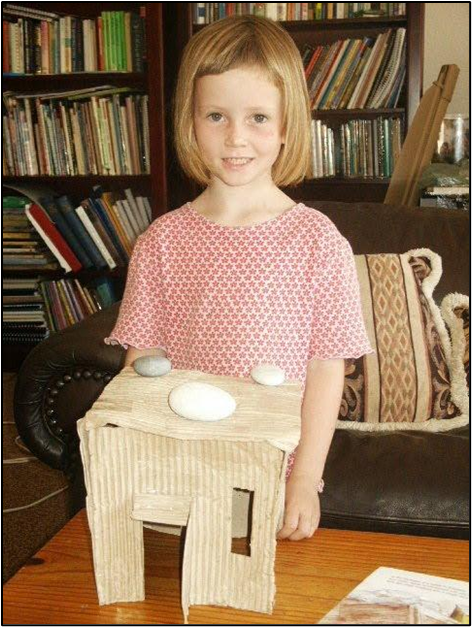
| Construction and block play | Model house building, cardboard creations, box construction, recycled material projects |
| Fantasy and role play | Dramatic storytelling, acting out animal roles, dress-up, community role play (shopkeeper, baker, farmer) |
| Discovery and nature-based activities | Gardening, feeding birds, collecting leaves and seeds, observing insects, maintaining nature tables |
Alignment: 100% of CAPS Physical Education areas are covered naturally through integrated play, movement and creative learning.
Children’s physical coordination, strength, rhythm and sensory awareness are developed through meaningful activities rather than isolated drills.
Beyond Compliance: Why Little Footprints is a Superior Foundation
While Little Footprints comfortably meets and exceeds the knowledge outcomes in CAPS, it also transforms how children learn. Instead of memorising disconnected facts, children live the learning through stories, art and hands-on projects.
For example:
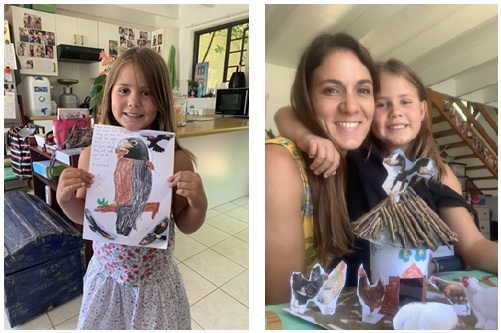
- When studying birds, children read poetry about black eagles, listen to African Sky Blue, study bird behaviour and paint feathers—integrating science, art and music.
- When exploring family and community, they learn about Xhosa village life, create model huts and discuss respect and generosity through Bible stories.
- When learning about weather and seasons, they record rainfall, create nature journals and map South African landscapes.
This approach builds connections between subjects, deepens comprehension and develops a lifelong curiosity—key qualities often missing in worksheet-driven education. In addition, Little Footprints adds all the rich benefits of reading aloud, which research shows give children a lifelong academic advantage as explained in our article, Give your children a 1.4 million-word advantage.
In Summary
| Comparison Area | CAPS | Little Footprints |
| Coverage of required themes | ±40 broad topics | Covers ±90–95% of CAPS themes but offers ±140 topics |
| Depth and integration | Surface-level, theme-by-theme | Deep cross-curricular connections across subjects |
| Cultural relevance | Generic / global | Distinctly South African, story-driven |
| Creative arts | Drawing, music, movement | Full visual art, art appreciation, music appreciation, poetry, crafts |
| Life skills and values | Basic hygiene and safety | Character formation, budgeting, entrepreneurship, practical responsibility, environmental care |
| Physical Education | Structured motor skills | Natural, joyful movement through daily life |
| Worldview | Secular / civic | Biblical worldview available for faith-based families |
Little Footprints is More than Enough
For homeschoolers seeking a rich, South African, literature-based curriculum, Little Footprints – South Africa in Stories does far more than meet the CAPS suggestions. It not only ensures compliance with national learning themes but also cultivates creativity, cultural awareness and character, setting a stronger foundation for lifelong learning.
If you need to show curriculum coverage to your provincial education department, you can confidently say that Little Footprints meets or exceeds CAPS outcomes—covering an estimated 90–95% of the required content, with added value in art, culture, faith and practical life skills.
Just add an age-appropriate Maths and a Reading/Phonics programme for “Home Language”!
Take a peek inside Little Footprints
To get an idea of the kinds of learning activities that you and your children will enjoy when you use one of our ‘foundation phase’ programmes, you can download a sample here:
Little Footprints Sample Lesson
If you are ready to order, simply click on the “Add to cart” button on our products below and complete your purchase in our online shop:
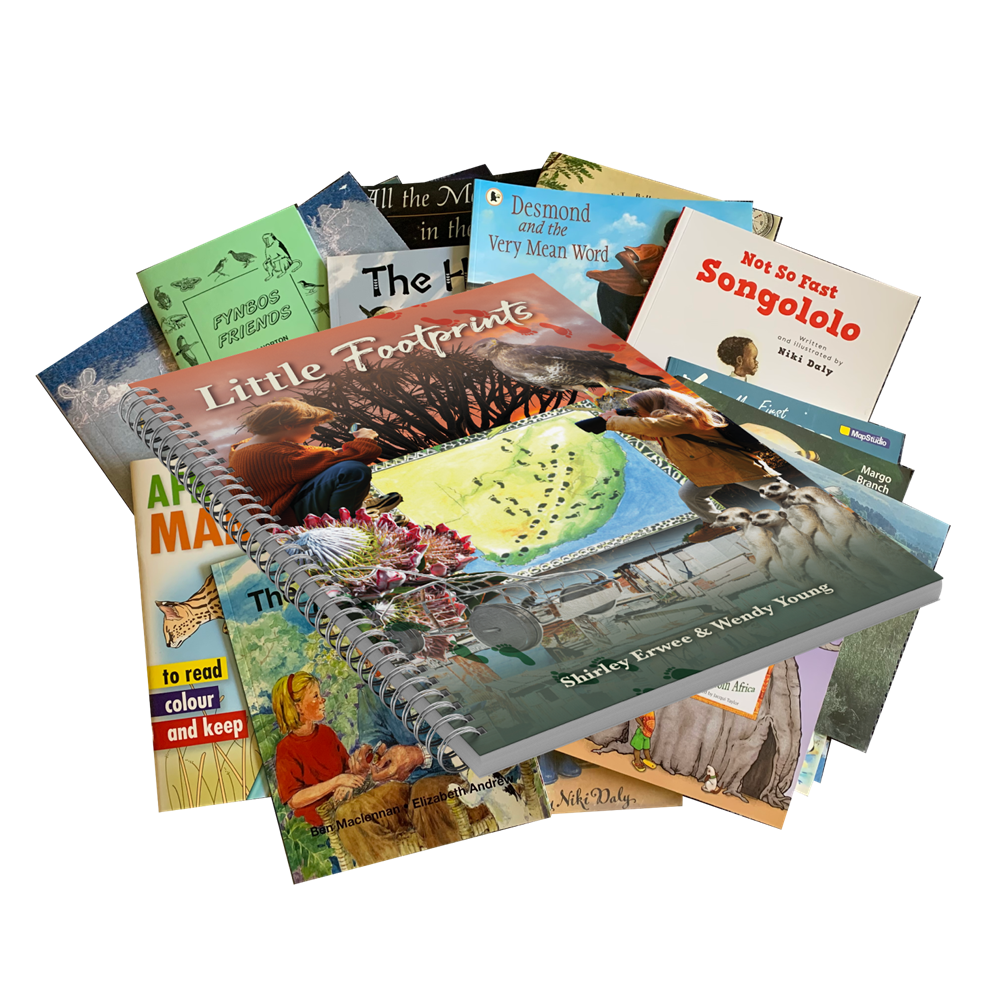
Little Footprints – South Africa in Stories
New updated 2026 edition!
Little Footprints – South Africa in stories is a South African literature-rich homeschool unit study, aimed at children between ages 4-8 years. Children love stories and parents love helping them to learn in such a fun, engaging way.
- Curriculum guide for parents
- story books to read aloud
- SA poetry books
- South African reference books
- Colouring books featuring SA flora and fauna
- SA children’s atlas
- South African outline wall map
- Picture discs to cut out and colour
- Printable maps and templates for various activities
- Course webpage with enrichment videos and resources